
Organizing Committee
- Marc Culler
University of Illinois - Nathan Dunfield
University of Illinois, Urbana-Champaign - Walter Neumann
Barnard College - Richard Schwartz
Brown University - Caroline Series
University of Warwick - Dylan Thurston
Indiana University - Genevieve Walsh
Tufts University - Anton Zorich
Institut de Mathématiques de Jussieu
Abstract
The program focuses on the recent impact of computation and experiment on the study of the pure mathematics sides of topology, geometry, and dynamics. Specific areas include 3-dimensional topology, the study of locally symmetric spaces, low-dimensional dynamics, and geometric group theory. Included are areas where computation has not yet had an impact, but might do so in the near future.
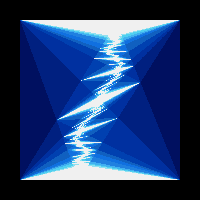
[Image courtesy of
Rich Schwartz, Brown University]
Confirmed Speakers & Participants
Talks will be presented virtually or in-person as indicated in the schedule below.
- Speaker
- Poster Presenter
- Attendee
- Virtual Attendee
-
Miguel Acosta
Ecole Normale SuptrieureSep 15-21, 2013
-
Ilesanmi Adeboye
Wesleyan UniversitySep 15-20, 2013
-
Ian Agol
University of California, BerkeleyOct 21-25, 2013
-
Mauro Artigiani
University of BristolNov 17-22, 2013
-
Nadya Askaripour
University of CincinnatiNov 17-22, 2013
-
Jayadev Athreya
University of WashingtonNov 14-20, 2013
-
Christopher Atkinson
University of Minnesota, MorrisOct 20-26, 2013
-
David Aulicino
University of ChicagoNov 17-22, 2013
-
Nir Avni
Northwestern UniversitySep 15-20, 2013
-
Shinpei Baba
California Institute of TechnologySep 15-20, 2013
-
Hyungryul Baik
Cornell UniversityOct 20-26, 2013
-
Matthew Bainbridge
Indiana UniversityNov 18-22, 2013
-
Samuel Ballas
University of California, Santa BarbaraSep 15-20, 2013
-
Thierry Barbot
Universite d'AvignonSep 15-20, 2013
-
Joshua Batson
Massachusetts Institute of TechnologyOct 21, 2013
-
Nicolas Bedaride
Aix-Marseille UniversityNov 17-22, 2013
-
Mark Bell
University of IllinoisSep 28-Nov 30, 2013
-
Bruno Benedetti
University of MiamiSep 28-Nov 28, 2013
-
Yves Benoist
Universite de Paris XI (Paris-Sud)Sep 15-20, 2013
-
Brian Benson
University of Illinois at Urbana-ChampaignSep 9-Dec 6, 2013
-
Corentin Boissy
Aix-Marseille UniversityNov 17-23, 2013
-
Joshua Bowman
Smith CollegeNov 18-22, 2013
-
Steven Bradlow
University of Illinois at Urbana-ChampaignSep 14-21, 2013
-
Sarah Bray
Tufts UniversitySep 18-20, 2013
-
Martin Bridgeman
Boston CollegeSep 9-Nov 6, 2013
-
Jeffrey Brock
Brown UniversitySep 9-Dec 6, 2013
-
Jean-Philippe Burelle
University of MarylandSep 15-21, 2013
-
Marc Burger
Swiss Federal Institute of TechnologySep 9-Dec 6, 2013; Sep 16-20, 2013
-
Ben Burton
University of QueenslandSep 30-Nov 14, 2013
-
Danny Calegari
University of ChicagoOct 21-25, 2013
-
Richard Canary
University of MichiganSep 17-19, 2013
-
Luca Capogna
Worcester Polytechnic InstituteSep 16-20, 2013
-
Michael Carr
Brandeis UniversityOct 21-25, 2013
-
Christopher Cashen
University of ViennaOct 12-26, 2013
-
Jon Chaika
University of UtahNov 18-22, 2013
-
Virginie Charette
University of SherbrookeSep 15-20, 2013
-
Ruth Charney
Brandeis UniversityOct 21-25, 2013
-
Suhyoung Choi
Korea Advanced Institute of Science and Technology (KAIST)Sep 15-20, 2013
-
Thomas Church
Stanford UniversityOct 22-26, 2013; Nov 19-23, 2013
-
Aaron Clark
Southern Connecticut State UniversityOct 21-25, 2013
-
Lucien Clavier
Cornell UniversitySep 7-Dec 8, 2013
-
Daniel Crane
University of QueenslandSep 13-Nov 20, 2013
-
Marc Culler
University of IllinoisSep 1-Dec 15, 2013
-
Maciej Czarnecki
University of ŁódźOct 20-26, 2013
-
Jeffrey Danciger
University of Texas at AustinSep 15-20, 2013
-
Diana Davis
Northwestern UniversityNov 18-22, 2013
-
Vincent Delecroix
CNRSOct 18-27, 2013; Oct 28-Nov 23, 2013
-
Martin Deraux
Universite de Grenoble I (Joseph Fourier)Sep 9-Nov 29, 2013
-
Joseph Dimos
Dislocated/Independent ResearchNov 17-23, 2013
-
Valentina Disarlo
Indiana UniversityNov 17-23, 2013
-
Spencer Dowdall
Vanderbilt UniversityOct 20-Nov 8, 2013
-
Todd Drumm
Howard UniversitySep 16-20, 2013
-
Moon Duchin
Tufts UniversitySep 9-Dec 6, 2013
-
David Dumas
University of Illinois at ChicagoAug 29-Dec 9, 2013
-
William Dunbar
Bard College at Simon's RockSep 9-Dec 6, 2013
-
Nathan Dunfield
University of Illinois, Urbana-ChampaignAug 17-Dec 8, 2013
-
Matthew Durham
University of MichiganOct 20-26, 2013
-
Eduard Duryev
Harvard UniversitySep 15-20, 2013; Nov 18-22, 2013
-
Heather Dye
McKendree UniversityOct 21-25, 2013
-
Jordan Emme
Aix-Marseille UniversityNov 17-23, 2013
-
Alex Eskin
University of ChicagoNov 18-22, 2013
-
Mark Feighn
Rutgers UniversityOct 21-25, 2013
-
Jon Fickenscher
Princeton UniversityNov 17-22, 2013
-
Simion Filip
University of ChicagoNov 17-23, 2013
-
Giovanni Forni
University of MarylandNov 18-22, 2013
-
Maxime Fortier Bourque
City University of New York (CUNY)Nov 19-22, 2013
-
Charles Fougeron
Ecole Normale SuptrieureNov 11-23, 2013
-
Dominik Francoeur
University of SherbrookeSep 15-20, 2013
-
Ser-Wei Fu
University of Illinois at Urbana-ChampaignNov 17-22, 2013
-
David Futer
Temple UniversitySep 9-Nov 8, 2013
-
David Gabai
Princeton UniversityOct 21-25, 2013
-
Vaibhav Gadre
University of WarwickNov 17-22, 2013
-
Mauricio García Tec
National Autonomous University of Mexico (UNAM)Oct 20-26, 2013
-
Ilya Gekhtman
Yale UniversitySep 16-20, 2013; Nov 18-22, 2013
-
Sourav Ghosh
Universite de Paris XI (Paris-Sud)Sep 14-21, 2013
-
Jane Gilman
Rutgers UniversitySep 22-Nov 2, 2013
-
William Goldman
University of MarylandSep 15-30, 2013
-
Matthias Görner
University of MarylandOct 21-25, 2013
-
Elise Goujard
Paris-Sud UniversityNov 11-23, 2013
-
Jordane Granier
Universite de FribourgSep 9-Oct 18, 2013
-
Ryan Greene
Ohio State UniversitySep 1-Dec 31, 2013
-
Daniel Groves
University of IllinoisOct 21-25, 2013
-
Olivier Guichard
Universite de Strasbourg I (Louis Pasteur)Sep 15-20, 2013
-
Adolfo Guillot
National Autonomous University of Mexico (UNAM)Sep 14-21, 2013
-
Funda Gultepe
University of Illinois at Urbana-ChampaignNov 18-22, 2013
-
Rosemary Guzman
University of Illinois at Urbana-ChampaignSep 8-Dec 6, 2013
-
Ursula Hamenstädt
Rheinische Friedrich-Wilhelms-Universität BonnNov 18-22, 2013
-
Jiyoung Han
Seoul National UniversitySep 14-21, 2013
-
Robert Haraway
Boston CollegeOct 21-25, 2013
-
Michael Harrison
Pennsylvania State UniversitySep 4-Dec 10, 2013
-
Joel Hass
University of California, DavisSep 15-20, 2013; Oct 20-26, 2013
-
Matthew Hedden
Michigan State UniversityOct 21-25, 2013
-
Sa'ar Hersonsky
University of GeorgiaNov 18-22, 2013
-
Eriko Hironaka
Florida State UniversitySep 14-28, 2013; Oct 13-26, 2013; Nov 17-28, 2013
-
Son Ho
University of MarylandSep 15-20, 2013
-
Craig Hodgson
University of MelbourneOct 19-31, 2013
-
Neil Hoffman
University of MelbourneOct 9-25, 2013
-
Jennifer Hom
Columbia UniversityOct 21-25, 2013
-
Pat Hooper
City College, CUNYSep 9-Dec 6, 2013
-
Hengnan Hu
National University of SingaporeSep 9-Oct 28, 2013
-
Zheng Huang
City University of New York (CUNY)Sep 17-20, 2013
-
Pascal Hubert
University Paul CézanneNov 18-22, 2013
-
Dominique Hulin
Universite de Paris XI (Paris-Sud)Sep 13-20, 2013
-
Sebastian Hurtado
University of California, BerkeleyOct 20-25, 2013
-
Alessandra Iozzi
ETHSep 15-20, 2013
-
Ingrid Irmer
National University of SingaporeSep 9-Dec 6, 2013
-
Oleg Ivrii
Harvard UniversityNov 18-22, 2013
-
Matthieu Jacquemet
Universite de FribourgSep 7-21, 2013
-
BoGwang Jeon
University of Illinois at Urbana-ChampaignSep 1-Dec 31, 2013
-
Charles Johnson
Wake Forest UniversityNov 17-23, 2013
-
Christopher Judge
Indiana UniversityNov 17-23, 2013
-
Yuichi Kabaya
Osaka UniversityOct 15-27, 2013
-
Fanny Kassel
Universite de Lille I (Sciences et Techniques de Lille Flandres Artois)Sep 15-20, 2013
-
Ruth Kellerhals
Universite de FribourgSep 6-17, 2013
-
Autumn Kent
University of WisconsinOct 19-27, 2013
-
Steve Kerckhoff
Stanford UniversitySep 9-Oct 5, 2013
-
Sang-hyun Kim
Korea Advanced Institute of Science and Technology (KAIST)Sep 15-Dec 7, 2013
-
Joonhyung Kim
Kon-Kuk UniversitySep 13-21, 2013
-
Sungwoon Kim
Korea Institute for Advanced Study (KIAS)Sep 14-21, 2013
-
Youngju Kim
Korea Institute for Advanced Study (KIAS)Sep 14-21, 2013
-
Eiko Kin
Osaka UniversityOct 20-26, 2013
-
Adam Knapp
American UniversityOct 21-25, 2013
-
Kihyoung Ko
Korea Advanced Institute of Science and Technology (KAIST)Sep 16-20, 2013; Oct 21-25, 2013
-
Aleksandr Kolpakov
University of TorontoSep 14-21, 2013
-
Cagatay Kutluhan
University at Buffalo (SUNY)Oct 21-22, 2013
-
Francois Labourie
Universite de Paris XI (Paris-Sud)Sep 15-20, 2013
-
Erwan Lanneau
Universite de Grenoble I (Joseph Fourier)Nov 18-22, 2013
-
Greg Laun
University of MarylandSep 15-20, 2013
-
Cyril Lecuire
Universite de Toulouse III (Paul Sabatier)Sep 15-Oct 26, 2013
-
Gye-Seon Lee
Ruprecht-Karls-Universität HeidelbergSep 14-21, 2013
-
Arielle Leitner
University of California, Santa BarbaraSep 7-Dec 8, 2013
-
Qiongling Li
Rice UniversitySep 14-21, 2013
-
Kathryn Lindsey
University of ChicagoSep 9-Dec 6, 2013
-
Robert Lipshitz
Columbia UniversityOct 16-21, 2013
-
Darren Long
University of California, Santa BarbaraSep 15-20, 2013
-
Joel Louwsma
Niagara UniversityOct 20-26, 2013
-
John Lowenstein
New York UniversityNov 18-22, 2013
-
Sara Maloni
Brown UniversitySep 9-Dec 6, 2013
-
Johanna Mangahas
University of BuffaloSep 9-Nov 26, 2013
-
Jason Manning
University at Buffalo (SUNY)Oct 21-25, 2013
-
Luca Marchese
Universite de Paris XIII (Paris-Nord)Nov 17-24, 2013
-
Ludovic Marquis
Universite de Rennes ISep 15-20, 2013
-
Gaven Martin
Massey UniversitySep 11-Nov 4, 2013
-
Eduardo Martinez-Pedroza
Memorial University of NewfoundlandOct 20-25, 2013
-
Hidetoshi Masai
Tokyo Institute of TechnologySep 13-Nov 23, 2013
-
Howard Masur
University of ChicagoNov 18-22, 2013
-
Carlos Matheus Silva Santos
Universite de Paris XIII (Paris-Nord)Nov 18-22, 2013
-
Curtis McMullen
Harvard UniversitySep 15-20, 2013; Nov 18-22, 2013
-
Karin Melnick
University of MarylandSep 15-19, 2013
-
Mayra Méndez Carrera
National Autonomous University of Mexico (UNAM)Sep 14-21, 2013
-
Sergiy Merenkov
University of Illinois at Urbana-ChampaignSep 14-20, 2013; Oct 21-25, 2013
-
Robert Meyerhoff
Boston CollegeOct 21-25, 2013
-
Milton Minervino
MontanuniversitätNov 10-24, 2013
-
Yair Minsky
Yale UniversitySep 15-20, 2013
-
Mahan Mitra
Ramakrishna Mission Vivekananda CollegeOct 6-26, 2013
-
Martin Möller
Goethe-Universitat FrankfurtNov 18-22, 2013
-
Gabriele Mondello
"Sapienza" Università di RomaSep 14-21, 2013
-
Leonid Monin
University of TorontoNov 15-23, 2013
-
Ronen Mukamel
Rice UniversityNov 20-22, 2013
-
Walter Neumann
Barnard CollegeOct 21-24, 2013
-
Robert Niemeyer
University of New MexicoOct 19-26, 2013; Nov 17-23, 2013
-
Chaya Norton
University of MontrealNov 19-22, 2013
-
Frederic Palesi
Aix-Marseille UniversitySep 15-20, 2013
-
Luisa Paoluzzi
Aix-Marseille UniversitySep 14-Nov 23, 2013
-
John Parker
University of DurhamSep 6-Dec 4, 2013
-
Hugo Parlier
Universite de FribourgOct 6-11, 2013
-
Julien Paupert
Arizona State UniversitySep 15-20, 2013; Oct 20-25, 2013
-
Catherine Pfaff
University of California, Santa BarbaraNov 14-27, 2013
-
Kevin Pilgrim
Indiana UniversityNov 18-22, 2013
-
Tali Pinsky
University of British ColumbiaOct 20-25, 2013
-
Anna Pratoussevitch
University of LiverpoolSep 13-22, 2013
-
Jessica Purcell
Monash UniversityOct 20-25, 2013
-
Petr Pushkar
Columbia UniversityNov 18-22, 2013
-
Yulan Qing
University of TorontoSep 14-20, 2013
-
Joseph Quinn
City University of New York (CUNY)Oct 21-23, 2013
-
Bela Racz
Princeton UniversityOct 21-25, 2013
-
Shawn Rafalski
Fairfield UniversityOct 21-25, 2013
-
Kasra Rafi
University of TorontoNov 18-22, 2013
-
David Ralston
College at Old Westbury, SUNYNov 15-19, 2013
-
Anja Randecker
Karlsruhe Institute of TechnologySep 9-Dec 5, 2013
-
Heather Reeve-Black
Queen Mary and Westfield CollegeNov 17-23, 2013
-
Alan Reid
University of Texas at AustinOct 21-25, 2013
-
Rodolfo Rios-Zertuche
Princeton UniversitySep 1-Dec 31, 2013
-
Igor Rivin
Temple UniversityAug 28, 2013-Aug 8, 2014
-
Kim Ruane
Tufts UniversityOct 17-18, 2013
-
Makoto Sakuma
Hiroshima UniversitySep 9-28, 2013
-
Eliane Salem
Université de Paris 6Nov 18-22, 2013
-
Bidyut Sanki
Indian Institute of ScienceSep 7-Dec 7, 2013
-
Jenya Sapir
University of Illinois, Urbana-ChampaignNov 17-23, 2013
-
Sucharit Sarkar
Princeton UniversityOct 21-25, 2013
-
Saul Schleimer
University of WarwickSep 11-Dec 14, 2013
-
Thomas Schmidt
Oregon State UniversityNov 18-22, 2013
-
Martin Schmoll
Clemson UniversityNov 18-22, 2013
-
Richard Schwartz
Brown UniversitySep 9-Dec 6, 2013
-
Jose Seade
National Autonomous University of Mexico (UNAM)Sep 15-20, 2013
-
Mehmet Haluk Sengun
University of WarwickSep 14-Oct 26, 2013
-
Andrea Seppi
Università di PaviaSep 14-21, 2013
-
Nitin Singh
Indian Institute of ScienceSep 7-Dec 9, 2013
-
John Smillie
Cornell UniversitySep 9-Dec 6, 2013
-
Fedor Soloviev
University of TorontoNov 17-23, 2013
-
Neal Stoltzfus
Louisiana State UniversityOct 21-25, 2013
-
Matthew Stover
Temple UniversityOct 21-25, 2013
-
Balazs Strenner
Institute for Advanced StudyNov 18-22, 2013
-
Chunyi Sun
University of OklahomaOct 21-25, 2013
-
Masaaki Suzuki
Meiji UniversityOct 20-26, 2013
-
Sergei Tabachnikov
ICERM and Penn StateSep 9-Dec 6, 2013
-
Ser Peow Tan
National University of SingaporeSep 8-Oct 7, 2013
-
Robert Tang
University of OklahomaSep 8-Dec 7, 2013
-
Jing Tao
University of OklahomaOct 16-20, 2013
-
Nicolas Tholozan
Universite de Nice Sophia AntipolisSep 15-23, 2013
-
Abigail Thompson
University of California, DavisOct 20-25, 2013
-
Scott Thomson
Universite de FribourgSep 8-30, 2013
-
Nathaniel Thurston
Google Inc.Oct 21-25, 2013
-
Dylan Thurston
Indiana UniversityOct 21-25, 2013
-
Stephan Tillmann
University of SydneyOct 21-25, 2013
-
Giulio Tiozzo
Yale UniversitySep 1, 2013-May 30, 2014
-
Jérémy Toulisse
Universite de Toulouse III (Paul Sabatier)Sep 15-20, 2013
-
Rodrigo Trevino
Tel Aviv UniversityNov 16-23, 2013
-
Anastasiia Tsvietkova
Institute for Computational and Experimental Research in Mathematics (ICERM)Sep 1-Dec 10, 2013
-
Venkata Turaga
Indian Institute of ScienceSep 7-Dec 8, 2013
-
Corinna Ulcigrai
University of BristolNov 18-22, 2013
-
Jose Valdez Lorenzo
National Autonomous University of Mexico (UNAM)Nov 16-24, 2013
-
Franco Vivaldi
University of LondonNov 18-22, 2013
-
Karen Vogtmann
University of WarwickSep 9-Dec 6, 2013
-
John Voight
Dartmouth CollegeOct 21-25, 2013
-
Denis Volk
Royal Institute of Technology (KTH)Nov 17-23, 2013
-
Alden Walker
University of ChicagoOct 21-25, 2013
-
Genevieve Walsh
Tufts UniversitySep 9-Dec 6, 2013
-
Biao Wang
Wesleyan UniversityOct 18-28, 2013
-
Liam Watson
University of GlasgowNov 1-Dec 1, 2013
-
Barak Weiss
Tel Aviv UniversityNov 18-22, 2013
-
Gabriella Weitze-Schmithuesen
Karlsruhe Institute of TechnologySep 7-Dec 6, 2013
-
Pierre Will
Universite de Grenoble I (Joseph Fourier)Sep 15-20, 2013
-
Michael Wolf
Rice UniversitySep 15-20, 2013
-
Maxime Wolff
Universite de Paris VI (Pierre et Marie Curie)Sep 15-20, 2013
-
Grace Work
University of Illinois at Urbana-ChampaignSep 1-Dec 14, 2013
-
Alexander Wright
University of ChicagoNov 18-22, 2013
-
Yunhui Wu
Rice UniversityNov 17-23, 2013
-
Chenxi Wu
Cornell UniversitySep 9-Dec 6, 2013
-
Chris Xiu
Princeton UniversityOct 20-25, 2013
-
Yasushi Yamashita
Nara Women's UniversitySep 9-13, 2013; Sep 14-20, 2013
-
Bohua Zhan
Princeton UniversityOct 20-26, 2013
-
Anton Zorich
Institut de Mathématiques de JussieuSep 23-Dec 6, 2013
-
Nicholas Zufelt
University of Texas at AustinOct 19-26, 2013
Visit dates listed on the participant list may be tentative and subject to change without notice.
Semester Schedule
Monday, September 9, 2013
| Time | Event | Location | Materials |
|---|---|---|---|
| 9:00 - 5:00pm EDT | "Low-dimensional Topology, Geometry, and Dynamics" Program Begins: Visitors are welcome to arrive at ICERM anytime after 9:00 am | ||
| 3:30 - 4:00pm EDT | Coffee Break | 11th Floor Collaborative Space |
Tuesday, September 10, 2013
| Time | Event | Location | Materials |
|---|---|---|---|
| 8:50 - 9:00am EDT | Welcome - Jill Pipher, Director, ICERM | 11th Floor Lecture Hall | |
| 9:00 - 9:05am EDT | 5-minute Graduate student introduction - Brian Benson, University of Illinois at Urbana-Champaign | 11th Floor Lecture Hall | |
| 9:05 - 9:10am EDT | 5-minute Graduate student introduction - Yongfei Ci, University of Illinois at Urbana-Champaign | 11th Floor Lecture Hall | |
| 9:10 - 9:15am EDT | 5-minute Graduate student introduction - Lucien Clavier, Cornell University | 11th Floor Lecture Hall | |
| 9:15 - 9:20am EDT | 5-minute Graduate student introduction - Jordane Granier, Université de Fribourg | 11th Floor Lecture Hall | |
| 9:20 - 9:25am EDT | 5-minute Graduate student introduction - Hengnan Hu, National University of Singapore | 11th Floor Lecture Hall | |
| 9:25 - 9:30am EDT | 5-minute Graduate student introduction - Matthieu Jacqumet, Université de Fribourg | 11th Floor Lecture Hall | |
| 9:30 - 9:35am EDT | 5-minute Graduate student introduction - Arielle Leitner, University of California, Santa Barbara | 11th Floor Lecture Hall | |
| 9:35 - 10:05am EDT | Coffee/Tea Break | 11th Floor Collaborative Space | |
| 10:05 - 10:10am EDT | 5-minute Graduate student introduction - Kathryn Lindsey, Cornell University | 11th Floor Lecture Hall | |
| 10:10 - 10:15am EDT | 5-minute Graduate student introduction - Anja Randecker, Karlsruhe Institute of Technology (KIT) | 11th Floor Lecture Hall | |
| 10:15 - 10:20am EDT | 5-minute Graduate student introduction - Bidyut Sanki, Indian Institute of Science | 11th Floor Lecture Hall | |
| 10:20 - 10:25am EDT | 5-minute Graduate student introduction - Nitin Singh, Indian Institute of Science | 11th Floor Lecture Hall | |
| 10:25 - 10:30am EDT | 5-minute Graduate student introduction - Venkata Turaga, Indian Institute of Science | 11th Floor Lecture Hall | |
| 10:30 - 10:35am EDT | 5-minute Graduate student introduction - Grace Work, University of Illinois at Urbana-Champaign | 11th Floor Lecture Hall | |
| 10:35 - 10:40am EDT | 5-minute Graduate student introduction - Chenxi Wu, Cornell University | 11th Floor Lecture Hall | |
| 10:40 - 11:10am EDT | Coffee/Tea Break | 11th Floor Collaborative Space | |
| 11:10 - 11:15am EDT | 5-minute Postdoc introduction - Ryan Greene, Ohio State University | 11th Floor Lecture Hall | |
| 11:15 - 11:20am EDT | 5-minute Postdoc introduction - Rosemary Guzman, University of Iowa | 11th Floor Lecture Hall | |
| 11:20 - 11:25am EDT | 5-minute Postdoc introduction - Ingrid Irmer, National University of Singapore | 11th Floor Lecture Hall | |
| 11:25 - 11:30am EDT | 5-minute Postdoc introduction - BoGwang Jeon, University of Illinois at Urbana-Champaign | 11th Floor Lecture Hall | |
| 11:30 - 11:35am EDT | 5-minute Postdoc introduction - Sara Maloni, Brown University | 11th Floor Lecture Hall | |
| 11:35 - 11:40am EDT | 5-minute Postdoc introduction - Johanna Mangahas, Brown University | 11th Floor Lecture Hall | |
| 11:40 - 11:45am EDT | 5-minute Postdoc introduction - Robert Tang, University of Warwick | 11th Floor Lecture Hall | |
| 11:45 - 11:50am EDT | 5-minute Postdoc introduction - Scott Thomson, Université de Fribourg | 11th Floor Lecture Hall | |
| 11:50 - 11:55am EDT | 5-minute Postdoc introduction - Giulio Tiozzo, Harvard University | 11th Floor Lecture Hall | |
| 11:55 - 12:00pm EDT | 5-minute Postdoc introduction - Anastasiia Tsvietkova, Louisiana State University | 11th Floor Lecture Hall | |
| 1:00 - 2:20pm EDT | Topics in geometric structures - Rich Schwartz, Brown University | 11th Floor Lecture Hall | |
| 3:30 - 4:00pm EDT | Coffee Break | 11th Floor Collaborative Space | |
| 4:30 - 6:00pm EDT | Welcome Reception | 11th Floor Collaborative Space |
Wednesday, September 11, 2013
| Time | Event | Location | Materials |
|---|---|---|---|
| 3:00 - 3:30pm EDT | IT Tutorial - Isani Cayetano, ICERM Technical Support Coordinator | 11th Floor Lecture Hall | |
| 3:30 - 4:00pm EDT | Coffee Break | 11th Floor Collaborative Space | |
| 4:00 - 5:00pm EDT | Grad Student & Postdoc Meeting with ICERM Directors | 11th Floor Lecture Hall |
Thursday, September 12, 2013
| Time | Event | Location | Materials |
|---|---|---|---|
| 10:30 - 11:50am EDT | Topics in geometric structures - Rich Schwartz, Brown University | 11th Floor Lecture Hall | |
| 1:00 - 2:30pm EDT | Workshop Tutorial for Exotic Geometric Structures - Rich Schwartz, Brown University | 11th Floor Lecture Hall | |
| 3:30 - 4:00pm EDT | Coffee Break | 11th Floor Collaborative Space |
Friday, September 13, 2013
| Time | Event | Location | Materials |
|---|---|---|---|
| 1:00 - 2:30pm EDT | Workshop Tutorial for Exotic Geometric Structures - John Parker, University of Durham | 11th Floor Lecture Hall | |
| 3:30 - 4:00pm EDT | Coffee Break | 11th Floor Collaborative Space |
Monday, September 16, 2013
Tuesday, September 17, 2013
Wednesday, September 18, 2013
Thursday, September 19, 2013
Friday, September 20, 2013
Monday, September 23, 2013
| Time | Event | Location | Materials |
|---|---|---|---|
| 10:00 - 10:30am EDT | Postdoc and Graduate Student Seminar: The endless possibilities of Julia sets - Kathryn Lindsey, Cornell University | 11th Floor Lecture Hall | |
| 3:30 - 4:00pm EDT | Coffee Break | 11th Floor Collaborative Space |
Tuesday, September 24, 2013
| Time | Event | Location | Materials |
|---|---|---|---|
| 9:00 - 10:00am EDT | Professional Development: Job applications in academia | 11th Floor Lecture Hall | |
| 10:30 - 11:50am EDT | Topics in geometric structures - Rich Schwartz, Brown University | 11th Floor Lecture Hall | |
| 2:30 - 3:30pm EDT | Do analogs of Ratner's theorems hold for strata of translation surfaces? - John Smillie, Cornell University | 11th Floor Lecture Hall | |
| 3:30 - 4:00pm EDT | Coffee Break | 11th Floor Collaborative Space | |
| 6:30 - 7:30pm EDT | "MPE2013 Simons Lecture: On Growth and Form: Mathematics, Physics and Biology" - L. Mahadevan, Harvard University | Salomon Center, Brown University |
Wednesday, September 25, 2013
| Time | Event | Location | Materials |
|---|---|---|---|
| 10:00 - 10:30am EDT | Postdoc and Graduate Student Seminar: Hyperbolic length and algebraic integers - Scott Thomson, Université de Fribourg | 11th Floor Lecture Hall | |
| 10:30 - 11:00am EDT | Postdoc and Graduate Student Seminar: Hyperbolic structures on moduli spaces of metrics on S^2 - Jordane Granier, Université de Fribourg | 11th Floor Lecture Hall | |
| 3:30 - 4:00pm EDT | Coffee Break | 11th Floor Collaborative Space |
Thursday, September 26, 2013
| Time | Event | Location | Materials |
|---|---|---|---|
| 10:30 - 11:50am EDT | Topics in geometric structures - Rich Schwartz, Brown University | 11th Floor Lecture Hall | |
| 2:30 - 3:30pm EDT | Geometric structures on manifolds- A historical survey - Bill Goldman, University of Maryland | 11th Floor Lecture Hall | |
| 3:30 - 4:00pm EDT | Coffee Break | 11th Floor Collaborative Space |
Friday, September 27, 2013
| Time | Event | Location | Materials |
|---|---|---|---|
| 2:00 - 3:30pm EDT | Sage Programming Group | 11th Floor Collaborative Space | |
| 3:30 - 4:00pm EDT | Coffee Break | 11th Floor Collaborative Space |
Monday, September 30, 2013
| Time | Event | Location | Materials |
|---|---|---|---|
| 10:00 - 11:00am EDT | Postdoc and Graduate Student Seminar: Limits of closed abelian subgroupsof PSL(2,C) - Lucien Clavier, Cornell University | 11th Floor Lecture Hall | |
| 3:30 - 4:00pm EDT | Coffee Break | 11th Floor Collaborative Space |
Tuesday, October 1, 2013
| Time | Event | Location | Materials |
|---|---|---|---|
| 9:00 - 10:00am EDT | Professional Development: Ethics in research I | 11th Floor Lecture Hall | |
| 10:30 - 11:50am EDT | Topics in geometric structures - Rich Schwartz, Brown University | 11th Floor Lecture Hall | |
| 2:30 - 3:30pm EDT | An outer space for right-angled Artin groups - Karen Vogtmann, Cornell University | 11th Floor Lecture Hall | |
| 3:30 - 4:00pm EDT | Coffee Break | 11th Floor Collaborative Space |
Wednesday, October 2, 2013
| Time | Event | Location | Materials |
|---|---|---|---|
| 10:00 - 10:30am EDT | Postdoc and Graduate Student Seminar: Limits of the Cartan subgroup in SL(3,R) - Arielle Leitner, University of California, Santa Barbara | 11th Floor Lecture Hall | |
| 10:40 - 11:10am EDT | Postdoc and Graduate Student Seminar: action of affine diffeomorphisms on the relative cohomology of abelian square-tiled surfaces - Chenxi Wu, Cornell University | 11th Floor Lecture Hall | |
| 3:30 - 4:00pm EDT | Coffee Break | 11th Floor Collaborative Space |
Thursday, October 3, 2013
| Time | Event | Location | Materials |
|---|---|---|---|
| 10:30 - 11:50am EDT | Topics in geometric structures - Rich Schwartz, Brown University | 11th Floor Lecture Hall | |
| 3:30 - 4:00pm EDT | Coffee Break | 11th Floor Collaborative Space |
Friday, October 4, 2013
| Time | Event | Location | Materials |
|---|---|---|---|
| 3:30 - 4:00pm EDT | Coffee Break | 11th Floor Collaborative Space |
Monday, October 7, 2013
| Time | Event | Location | Materials |
|---|---|---|---|
| 10:00 - 11:30am EDT | Biological sense and mechanisms of death - Andrei V. Gudkov, Roswell Park Cancer Institute | 11th Floor Lecture Hall | |
| 12:00 - 1:00pm EDT | Postdoc and Graduate Student Seminar: The proof of Heawood's conjecture a.k.a Map Color Theorem - Nitin Singh, Indian Institute of Science | 11th Floor Lecture Hall | |
| 3:30 - 4:00pm EDT | Coffee Break | 11th Floor Collaborative Space |
Tuesday, October 8, 2013
| Time | Event | Location | Materials |
|---|---|---|---|
| 9:00 - 10:00am EDT | Professional Development: Ethics in research II | 11th Floor Lecture Hall | |
| 10:30 - 11:50am EDT | Topics in geometric structures - Rich Schwartz, Brown University | 11th Floor Lecture Hall | |
| 2:30 - 3:30pm EDT | Right-angled Artin groups acting on spheres - Dave Futer, Temple University | 11th Floor Lecture Hall | |
| 3:30 - 4:00pm EDT | Coffee Break | 11th Floor Collaborative Space |
Wednesday, October 9, 2013
| Time | Event | Location | Materials |
|---|---|---|---|
| 10:00 - 10:30am EDT | Postdoc and Graduate Student Seminar: The Hurwitz way to count tiled surfaces - Rodolfo Rios-Zertuche, Princeton University | 11th Floor Lecture Hall | |
| 10:40 - 11:10am EDT | Postdoc and Graduate Student Seminar: Hyperbolic volume of alternating links and the colored Jones polynomial - Anastasiia Tsvietkova, ICERM | 11th Floor Lecture Hall | |
| 3:30 - 4:00pm EDT | Coffee Break | 11th Floor Collaborative Space |
Thursday, October 10, 2013
| Time | Event | Location | Materials |
|---|---|---|---|
| 10:30 - 11:50am EDT | Topics in geometric structures - Rich Schwartz, Brown University | 11th Floor Lecture Hall | |
| 3:30 - 4:00pm EDT | Coffee Break | 11th Floor Collaborative Space |
Friday, October 11, 2013
| Time | Event | Location | Materials |
|---|---|---|---|
| 2:00 - 3:00pm EDT | SAGE Program Group - Arielle Leitner | 11th Floor Collaborative Space | |
| 3:30 - 4:00pm EDT | Coffee Break | 11th Floor Collaborative Space |
Monday, October 14, 2013
| Time | Event | Location | Materials |
|---|---|---|---|
| 8:30 - 5:00pm EDT | ICERM Closed | 11th Floor Collaborative Space |
Tuesday, October 15, 2013
| Time | Event | Location | Materials |
|---|---|---|---|
| 10:30 - 11:50am EDT | Topics in geometric structures - Rich Schwartz, Brown University | 11th Floor Lecture Hall | |
| 2:30 - 3:30pm EDT | Complex Hyperbolic Quasi-Fuchsian Groups - a survey - John Parker, University of Durham | 11th Floor Lecture Hall | |
| 3:30 - 4:00pm EDT | Coffee Break | 11th Floor Collaborative Space | |
| 4:00 - 4:45pm EDT | Extension of Weekly Seminar (if necessary) |
Wednesday, October 16, 2013
| Time | Event | Location | Materials |
|---|---|---|---|
| 10:00 - 11:00am EDT | Slicing and Dicing - Robert Tang, University of Warwick | 11th Floor Lecture Hall | |
| 3:30 - 4:00pm EDT | Coffee Break | 11th Floor Collaborative Space |
Thursday, October 17, 2013
| Time | Event | Location | Materials |
|---|---|---|---|
| 10:30 - 11:50am EDT | Topics in geometric structures - Rich Schwartz, Brown University | 11th Floor Lecture Hall | |
| 1:30 - 3:00pm EDT | Hyperbolic 3-Manifolds - Jeff Brock, Brown University | 11th Floor Lecture Hall | |
| 3:00 - 3:30pm EDT | Coffee Break | 11th Floor Collaborative Space | |
| 3:30 - 5:00pm EDT | Floer Theory - Robert Lipshitz, Columbia University | 11th Floor Lecture Hall |
Friday, October 18, 2013
| Time | Event | Location | Materials |
|---|---|---|---|
| 10:30 - 12:00pm EDT | Cube complexes & boundaries - Kim Ruane, Tufts University | 11th Floor Lecture Hall | |
| 1:30 - 3:00pm EDT | Surfaces & Mod_g - Jing Tao, University of Oklahoma | 11th Floor Lecture Hall | |
| 3:00 - 3:30pm EDT | Coffee Break | 11th Floor Collaborative Space | |
| 3:30 - 5:00pm EDT | Floer Theory - Robert Lipshitz, Columbia University | 11th Floor Lecture Hall |
Monday, October 21, 2013
Tuesday, October 22, 2013
Wednesday, October 23, 2013
Thursday, October 24, 2013
Friday, October 25, 2013
Monday, October 28, 2013
| Time | Event | Location | Materials |
|---|---|---|---|
| 10:00 - 10:30am EDT | Postdoc and Graduate Student Seminar: "Triangulations and normal surfaces" - Daniel Crane, University of Queensland | 11th Floor Lecture Hall | |
| 10:40 - 11:10am EDT | Postdoc and Graduate Student Seminar: "Hyperbolic 3-manifolds of bounded volume and trace field degree" - BoGwang Jeon, ICERM | 11th Floor Lecture Hall | |
| 3:30 - 4:00pm EDT | Coffee Break | 11th Floor Collaborative Space |
Tuesday, October 29, 2013
| Time | Event | Location | Materials |
|---|---|---|---|
| 9:00 - 10:00am EDT | Professional Development: Hiring process | 11th Floor Lecture Hall | |
| 10:30 - 11:50am EDT | Topics in geometric structures - Rich Schwartz, Brown University | 11th Floor Lecture Hall | |
| 2:30 - 3:30pm EDT | Weekly Seminar - Anton Zorich, Université de Rennes I | 11th Floor Lecture Hall | |
| 3:30 - 4:00pm EDT | Coffee Break | 11th Floor Collaborative Space | |
| 4:00 - 4:45pm EDT | Extension of Weekly Seminar (if necessary) | 11th Floor Lecture Hall |
Wednesday, October 30, 2013
| Time | Event | Location | Materials |
|---|---|---|---|
| 10:00 - 11:00am EDT | Postdoc and Graduate Student Seminar: "Constructing Jones Polynomial through Tangles" - Venkata Turaga, Indian Institute of Science | 11th Floor Lecture Hall | |
| 3:30 - 4:00pm EDT | Coffee Break | 11th Floor Collaborative Space |
Thursday, October 31, 2013
| Time | Event | Location | Materials |
|---|---|---|---|
| 10:30 - 11:50am EDT | Topics in geometric structures - Rich Schwartz, Brown University | 11th Floor Lecture Hall | |
| 12:00 - 12:20pm EDT | Introductory Talk - Robert Tang, University of Warwick | 11th Floor Lecture Hall | |
| 12:20 - 1:20pm EDT | Lunch | 11th Floor Collaborative Space | |
| 1:30 - 2:30pm EDT | Seminar - Saul Schleimer, University of Warwick | 11th Floor Lecture Hall | |
| 2:30 - 3:30pm EDT | Coffee/Tea - TBA | 11th Floor Collaborative Space |
Friday, November 1, 2013
| Time | Event | Location | Materials |
|---|---|---|---|
| 2:00 - 3:00pm EDT | SAGE Program Group | 11th Floor Collaborative Space | |
| 3:30 - 4:00pm EDT | Coffee Break | 11th Floor Collaborative Space |
Monday, November 4, 2013
| Time | Event | Location | Materials |
|---|---|---|---|
| 10:00 - 11:00am EST | Postdoc and Graduate Student Seminar: "Entropies of quadratic polynomials, Galois conjugates and fractals" - Giulio Tiozzo, ICERM | 11th Floor Lecture Hall | |
| 2:00 - 3:00pm EST | Seminar: "Proof of Klarreich's theorem" - Saul Schleimer, University of Warwick | ||
| 3:30 - 4:00pm EST | Coffee Break | 11th Floor Collaborative Space |
Tuesday, November 5, 2013
| Time | Event | Location | Materials |
|---|---|---|---|
| 9:00 - 10:00am EST | Professional Development: Papers and journals | 11th Floor Lecture Hall | |
| 10:30 - 11:50am EST | Topics in geometric structures - Rich Schwartz, Brown University | 11th Floor Lecture Hall | |
| 12:00 - 1:00pm EST | Graduate Student and Postdoc Lunch | 11th Floor Lecture Hall | |
| 2:30 - 3:30pm EST | Weekly Seminar: "Hyperbolic structures from links diagrams" - Anastasiia Tsvietkova, Institute for Computational and Experimental Research in Mathematics (ICERM) | 11th Floor Lecture Hall | |
| 3:30 - 4:00pm EST | Coffee Break | 11th Floor Collaborative Space | |
| 4:00 - 4:45pm EST | Extension of Weekly Seminar (if necessary) - 11th Floor Lecture Hall |
Wednesday, November 6, 2013
| Time | Event | Location | Materials |
|---|---|---|---|
| 10:00 - 10:30am EST | Postdoc and Graduate Student Seminar: "Coordinates for curves" - Mark Bell, University of Warwick | 11th Floor Lecture Hall | |
| 10:40 - 11:10am EST | Postdoc and Graduate Student Seminar: "Reflection groups and geometric structures" - Ryan Greene, ICERM | 11th Floor Lecture Hall | |
| 3:30 - 4:00pm EST | Coffee Break | 11th Floor Collaborative Space |
Thursday, November 7, 2013
| Time | Event | Location | Materials |
|---|---|---|---|
| 10:30 - 11:50am EST | Topics in geometric structures - Rich Schwartz, Brown University | 11th Floor Lecture Hall | |
| 2:30 - 3:30pm EST | Weekly Seminar: "Deterministic randomness, or: genericity everywhere" - Igor Rivin, Temple University | 11th Floor Lecture Hall | |
| 3:30 - 4:00pm EST | Coffee Break | 11th Floor Collaborative Space |
Friday, November 8, 2013
| Time | Event | Location | Materials |
|---|---|---|---|
| 2:00 - 3:30pm EST | SAGE Program Group | 11th Floor Collaborative Space | |
| 3:30 - 4:00pm EST | Coffee Break (10th Floor) | 10th Floor Collaborative Space |
Monday, November 11, 2013
| Time | Event | Location | Materials |
|---|---|---|---|
| 10:00 - 11:00am EST | Postdoc and Graduate Student Seminar: "The Cheeger Constant and the First Eigenvalue of the Laplacian" - Brian Benson, University of Illinois at Urbana-Champaign | 11th Floor Lecture Hall | |
| 11:30 - 1:00pm EST | Topics in geometric structures | geometric structures | |
| 3:30 - 4:00pm EST | Coffee Break | 11th Floor Collaborative Space |
Tuesday, November 12, 2013
| Time | Event | Location | Materials |
|---|---|---|---|
| 9:00 - 10:00am EST | Professional Development: Grant proposals | 11th Floor Lecture Hall | |
| 10:30 - 11:50am EST | Topics in geometric structures - Rich Schwartz, Brown University | 11th Floor Lecture Hall | |
| 2:30 - 3:30pm EST | Weekly Seminar: "Khovanov homology and the symmetry group of a knot" - Liam Watson, University of Glasgow | 11th Floor Lecture Hall | |
| 3:30 - 4:00pm EST | Coffee Break | 11th Floor Collaborative Space | |
| 4:00 - 4:45pm EST | Extension of Weekly Seminar (if necessary) | 11th Floor Lecture Hall |
Wednesday, November 13, 2013
| Time | Event | Location | Materials |
|---|---|---|---|
| 10:00 - 10:30am EST | Postdoc and Graduate Student Seminar: "Hyperbolic 3-manifolds with k-free fundamental group" - Rosemary Guzman, University of Iowa | 11th Floor Lecture Hall | |
| 10:40 - 11:10am EST | Postdoc and Graduate Student Seminar: "Commensurable fibrations on a hyperbolic 3-manifold" - Hidetoshi Masai, Tokyo Institute of Technology | 11th Floor Lecture Hall | |
| 3:00 - 4:00pm EST | Floer homology and orderability of 3-‐manifold groups (Foxboro Auditorium) - Nathan Dunfield, UIUC | Foxboro Auditorium | |
| 3:30 - 4:00pm EST | Coffee Break | 11th Floor Collaborative Space |
Thursday, November 14, 2013
| Time | Event | Location | Materials |
|---|---|---|---|
| 10:30 - 11:50am EST | Topics in geometric structures - Rich Schwartz, Brown University | 11th Floor Lecture Hall | |
| 2:30 - 4:00pm EST | Workshop Tutorial Session I: Introducing polygonal inner and outer billiards - Sergei Tabachnikov, Pennsylvania State University | 11th Floor Lecture Hall | |
| 4:00 - 4:30pm EST | Coffee Break | 11th Floor Collaborative Space |
Friday, November 15, 2013
| Time | Event | Location | Materials |
|---|---|---|---|
| 10:00 - 11:30am EST | Workshop Tutorial Session II: Finding closed geodesics on rational billiard tables - John Smillie, Cornell University | 11th Floor Lecture Hall | |
| 2:00 - 3:30pm EST | Workshop Tutorial Session III: Counting and the Siegel-Veech Machine - Jayadev Athreya, University of Illinois at Urbana-Champaign | 11th Floor Lecture Hall | |
| 3:30 - 4:00pm EST | Coffee Break | 11th Floor Collaborative Space | |
| 4:00 - 5:00pm EST | Presentation of SAGE | 11th Floor Lecture Hall |
Monday, November 18, 2013
Tuesday, November 19, 2013
Wednesday, November 20, 2013
Thursday, November 21, 2013
Friday, November 22, 2013
Monday, November 25, 2013
| Time | Event | Location | Materials |
|---|---|---|---|
| 10:00 - 10:30am EST | Postdoc and Graduate Student Seminar: "The Hirsch conjecture" - Bruno Benedetti, Royal Institute of Technology (KTH) | 11th Floor Lecture Hall | |
| 10:40 - 11:10am EST | Postdoc and Graduate Student Seminar: "Classification of non-compact surfaces" - Anja Randecker, Karlsruhe Institute of Technology | 11th Floor Lecture Hall | |
| 11:30 - 1:00pm EST | Topics in geometric structures | geometric structures | |
| 2:30 - 3:30pm EST | Postdoc and Graduate Student Seminar: "Background material for plumbing constructions and Quasifuchsian manifolds" - Sara Maloni, Brown University | 11th Floor Lecture Hall | |
| 3:30 - 4:00pm EST | Coffee Break | 11th Floor Collaborative Space |
Tuesday, November 26, 2013
| Time | Event | Location | Materials |
|---|---|---|---|
| 10:30 - 11:50am EST | Topics in geometric structures - Rich Schwartz, Brown University | 11th Floor Lecture Hall | |
| 3:30 - 4:00pm EST | Coffee Break | 11th Floor Collaborative Space | |
| 4:15 - 5:15pm EST | Weekly Seminar: "Plumbing constructions and slices of Quasifuchsian space" - Sara Maloni, Brown University | 11th Floor Lecture Hall |
Wednesday, November 27, 2013
| Time | Event | Location | Materials |
|---|---|---|---|
| 12:00 - 5:00pm EST | ICERM will close at 12:00 PM | ||
| 2:00 - 3:30pm EST | SAGE meeting | 11th Floor Collaborative Space |
Thursday, November 28, 2013
| Time | Event | Location | Materials |
|---|---|---|---|
| 8:30 - 5:00pm EST | ICERM Closed |
Friday, November 29, 2013
| Time | Event | Location | Materials |
|---|---|---|---|
| 8:30 - 5:00pm EST | ICERM Closed |
Monday, December 2, 2013
| Time | Event | Location | Materials |
|---|---|---|---|
| 10:00 - 10:30am EST | Postdoc and Graduate Student Seminar: "How to define singularities in General Relativity" - Ingrid Irmer, National University of Singapore | 11th Floor Lecture Hall | |
| 11:30 - 1:00pm EST | Topics in geometric structures | ||
| 3:30 - 4:00pm EST | Coffee Break | 11th Floor Collaborative Space |
Tuesday, December 3, 2013
| Time | Event | Location | Materials |
|---|---|---|---|
| 10:30 - 11:50am EST | Topics in geometric structures - Rich Schwartz, Brown University | 11th Floor Lecture Hall | |
| 1:00 - 2:30pm EST | Seminar: "Translation Surfaces" | 11th Floor Conference Room | |
| 2:30 - 3:30pm EST | Weekly Seminar: "From continued fractions to complex dynamics: an explicit dictionary" - Giulio Tiozzo, Harvard University | 11th Floor Lecture Hall | |
| 3:30 - 4:00pm EST | Coffee Break | 11th Floor Collaborative Space | |
| 4:00 - 4:45pm EST | Extension of Weekly Seminar (if necessary) | 11th Floor Lecture Hall |
Wednesday, December 4, 2013
| Time | Event | Location | Materials |
|---|---|---|---|
| 12:30 - 2:30pm EST | Math Movies - Part I | 11th Floor Lecture Hall | |
| 2:30 - 3:00pm EST | Coffee Break | 11th Floor Collaborative Space | |
| 3:00 - 4:00pm EST | Math Movies - Part II | 11th Floor Lecture Hall | |
| 4:00 - 5:00pm EST | Geometry Topology Seminar: "Hyperbolic links: diagrams, volume and the colored Jones polynomial" - Anastasiia Tsvietkova, Louisiana State University | 11th Floor Lecture Hall |
Thursday, December 5, 2013
| Time | Event | Location | Materials |
|---|---|---|---|
| 10:30 - 11:50am EST | Topics in geometric structures - Rich Schwartz, Brown University | 11th Floor Lecture Hall | |
| 2:30 - 3:30pm EST | Held for any last minute lectures, special events, etc - TBA | 11th Floor Lecture Hall | |
| 3:30 - 4:00pm EST | Coffee Break | 11th Floor Collaborative Space |
Friday, December 6, 2013
| Time | Event | Location | Materials |
|---|---|---|---|
| 3:30 - 4:00pm EST | Coffee Break | 11th Floor Collaborative Space |
Lecture Videos
Workshop Tutorial for Exotic Geometric Structures
John Parker
University of Durham
September 13, 2013
Workshop Tutorial for Exotic Geometric Structures
Richard Schwartz
Brown University
September 12, 2013