Date started: November 2019
Leads: Sabetta Matsumoto, Pierre Arnoux, Samuel Lelièvre
Abstract
Inspired by Rich Schwartz’s lectures on translation surface and some conversations with Pierre and Samuel, I wanted to create tactile genus two translation surfaces. The first one is a rectangle suspension and the second is the double pentagon surface.
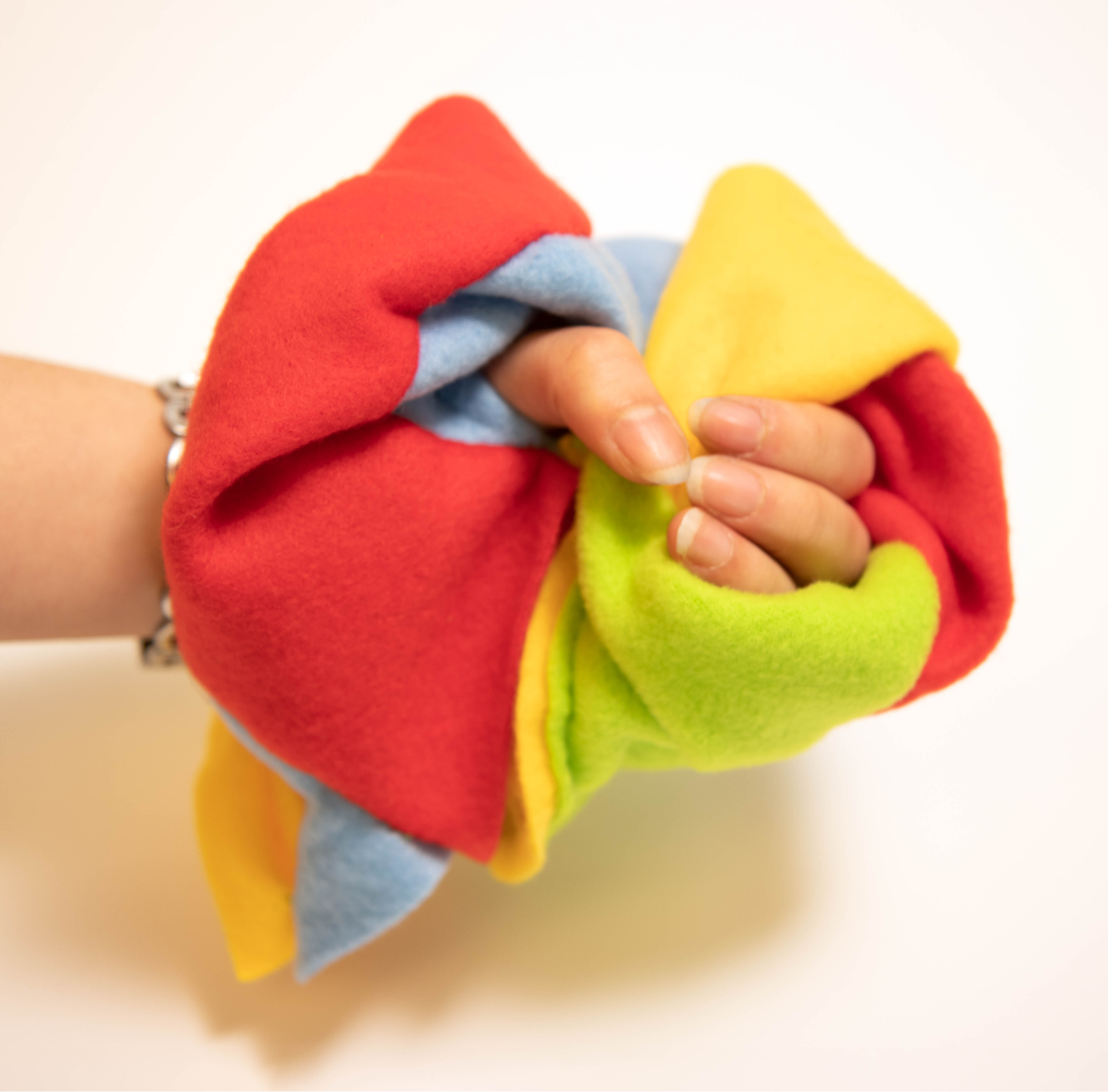
Media
The first surface is a rectangle suspension. The pattern came from a model that Maki Furukado made for Pierre Arnaux.
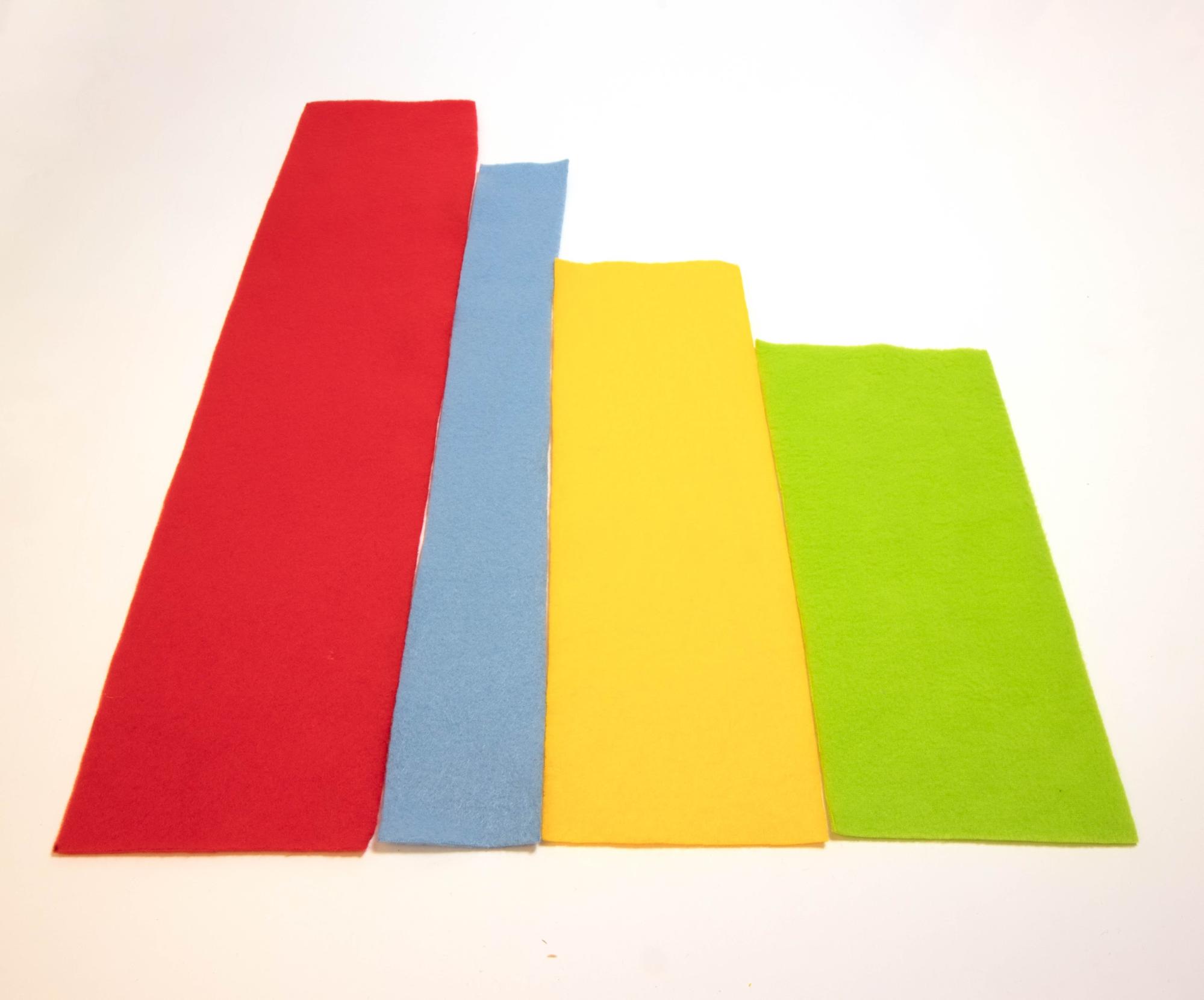
This is the layout for the rectangle suspension. (Image credit: Edmund Harriss)
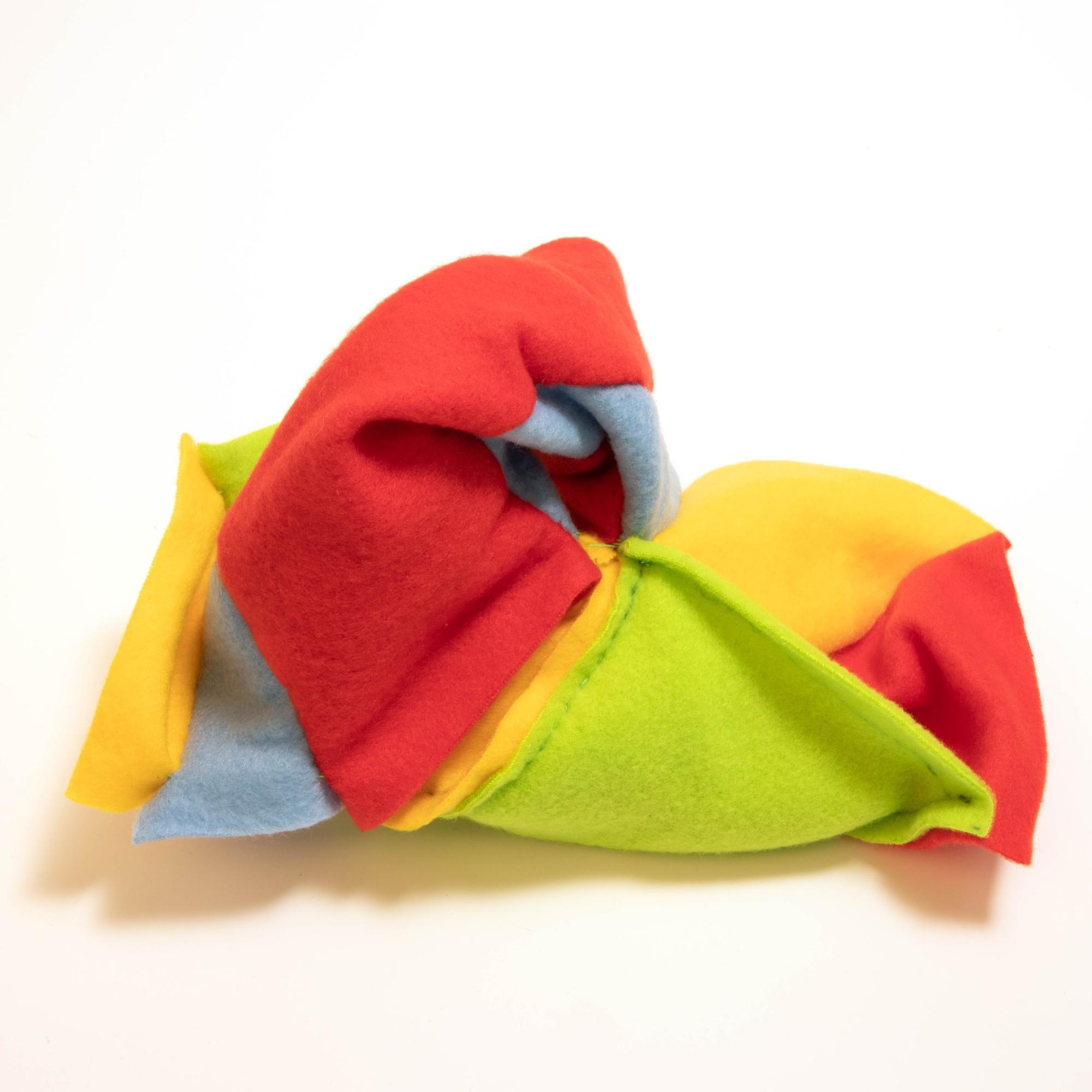
Here is a partially completed surface. (Image credit: Edmund Harriss)
It is currently a punctured genus-two surface, as you can see by my hand. (Image credit: Edmund Harriss)
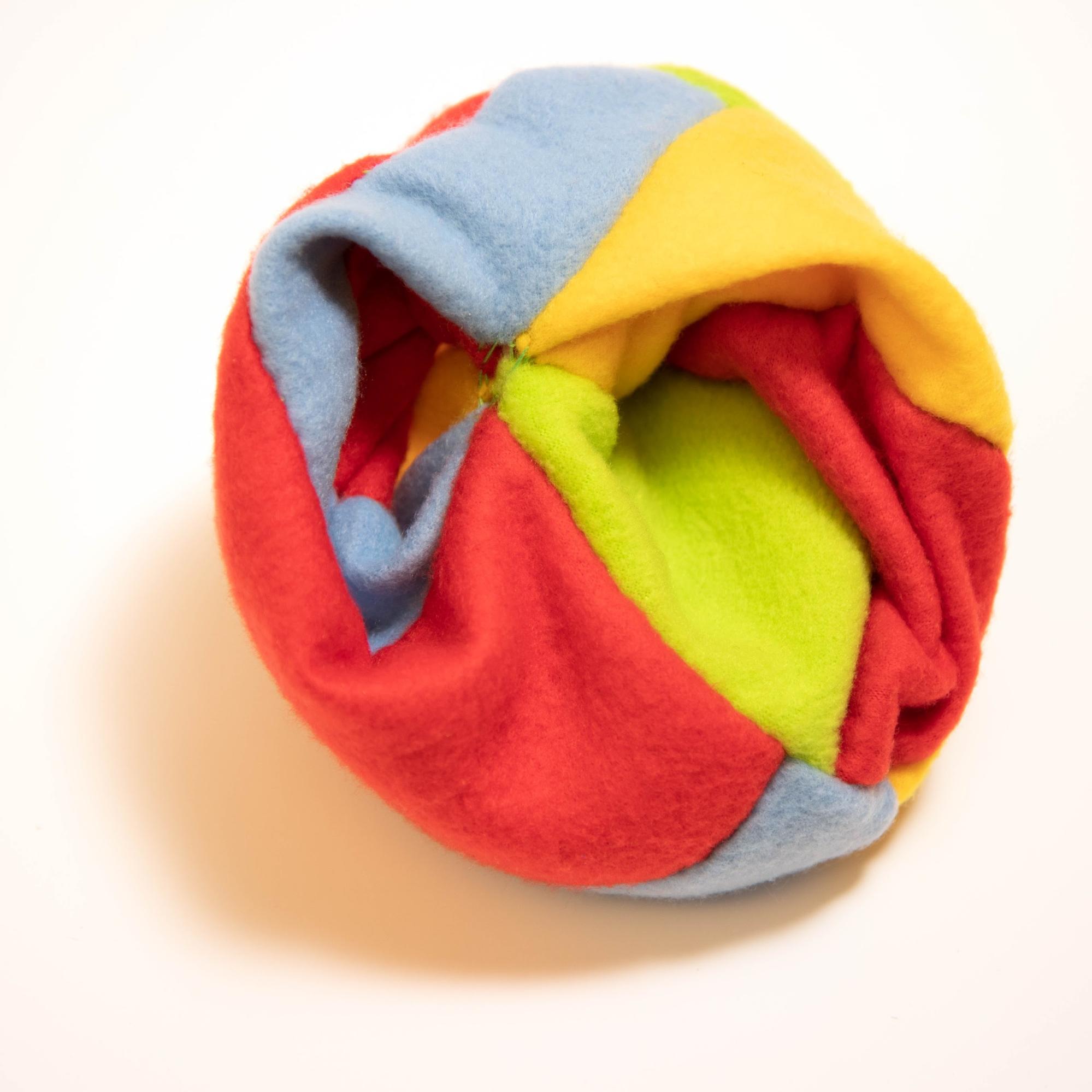
This is the finished object with the single "6 pi" singularity in the center.
Samuel Lelièvre requested I also make the double pentagon surface that he and Diana Davis have studied:
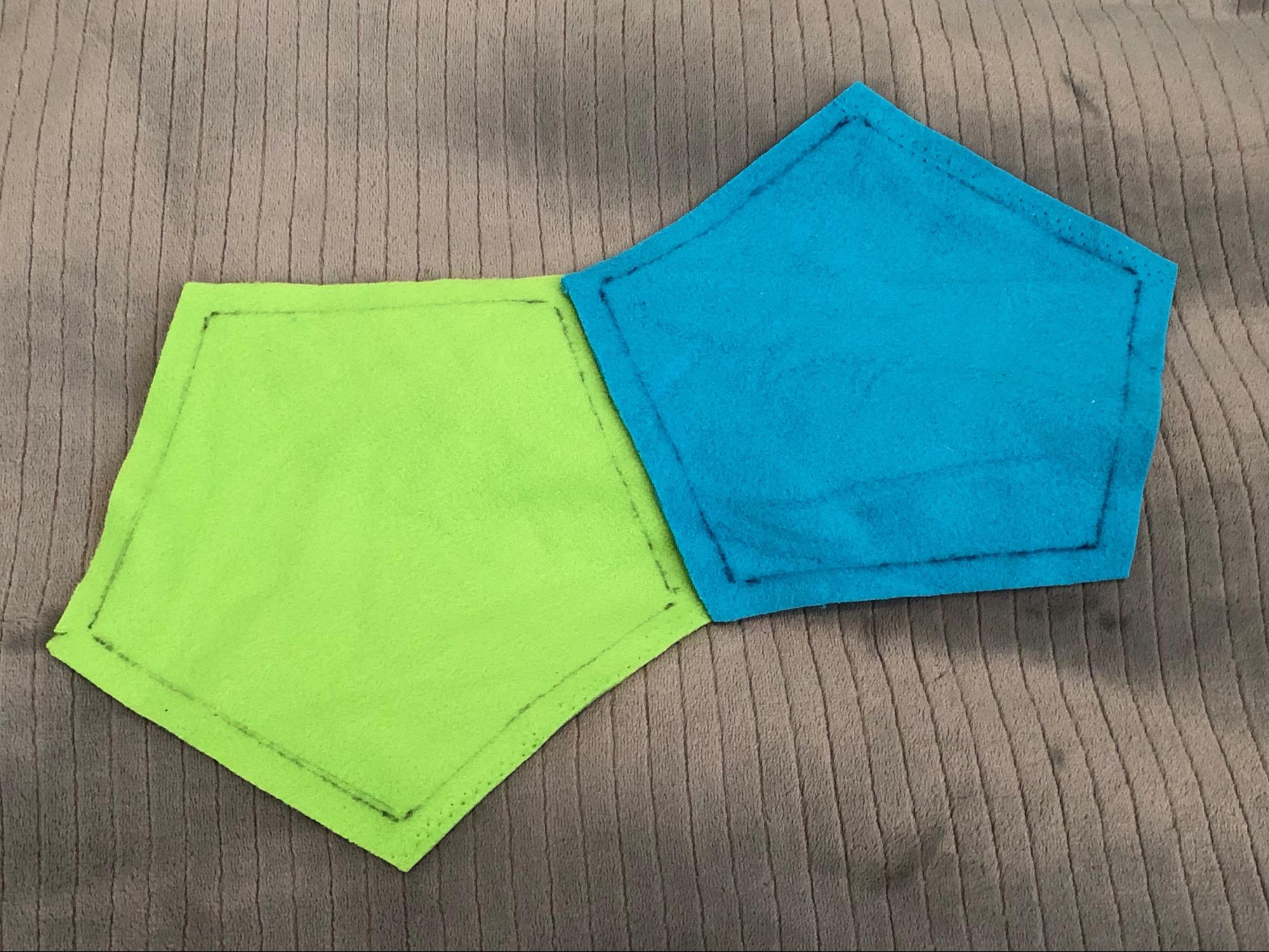
This surface starts with two pentagons oriented like this and then parallel edges are joined together.
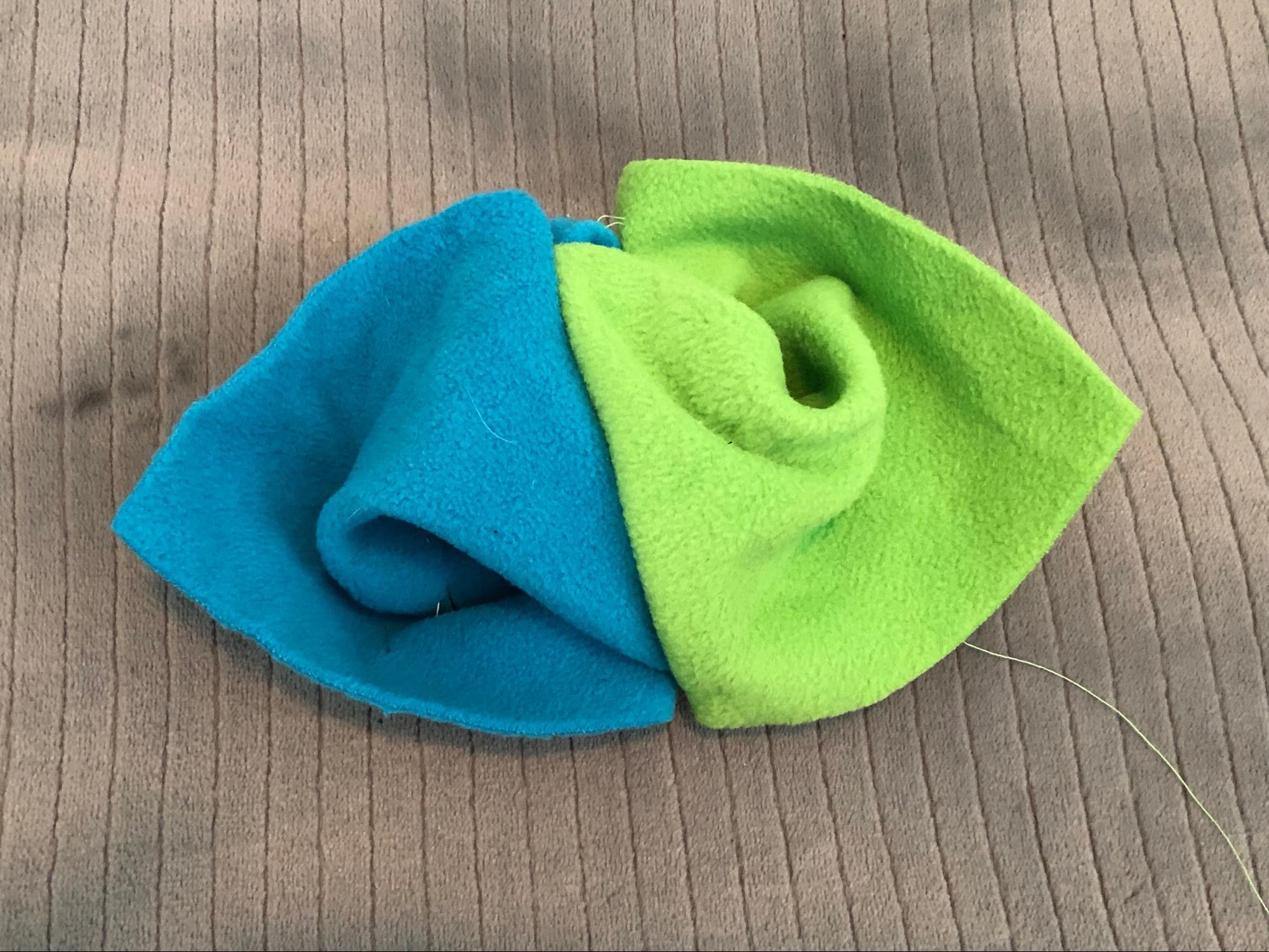
The double pentagon surface after the central 3 edges are joined together.
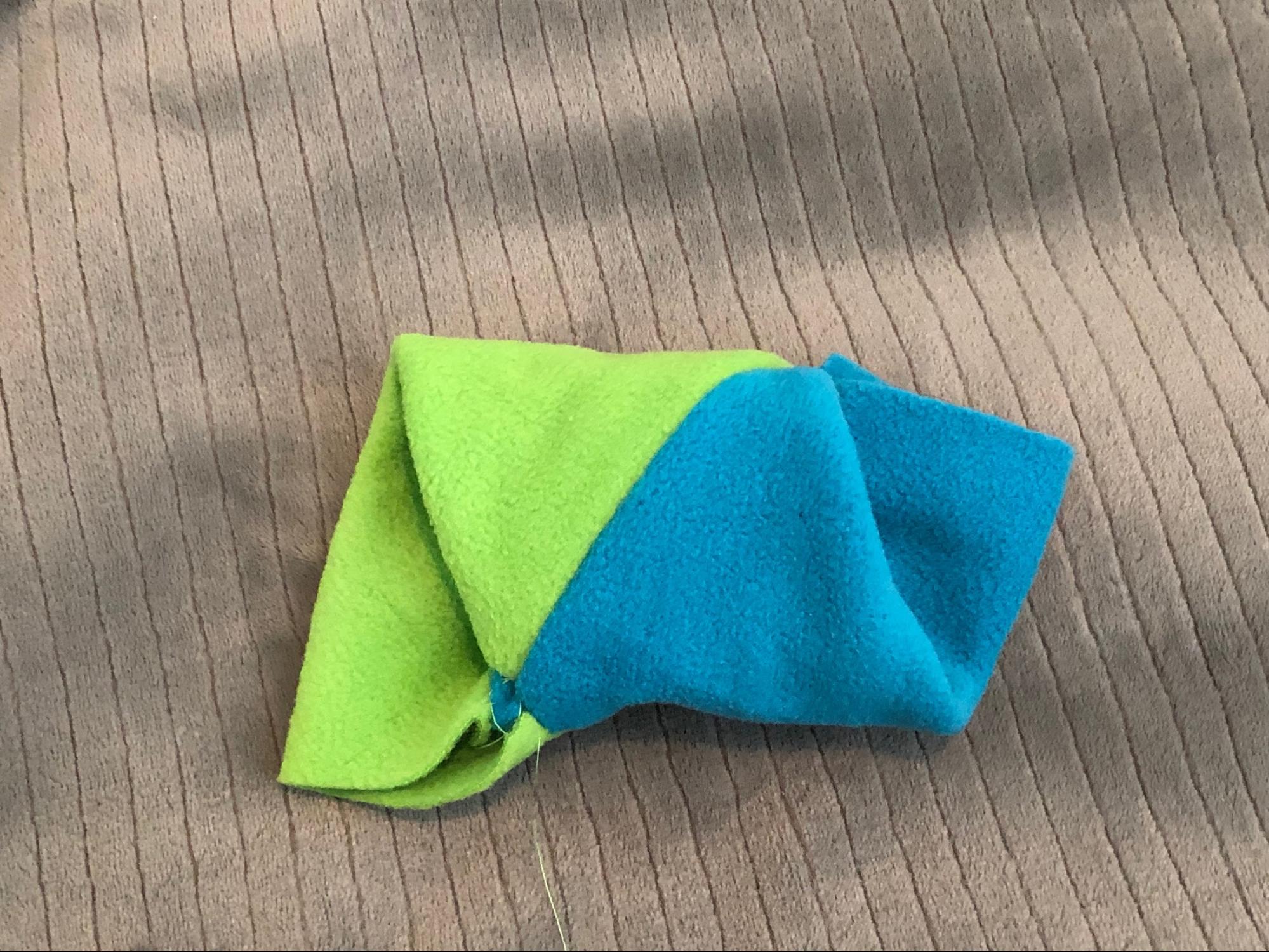
After the fourth edge is joined. It is still a punctured genus-one surface here.
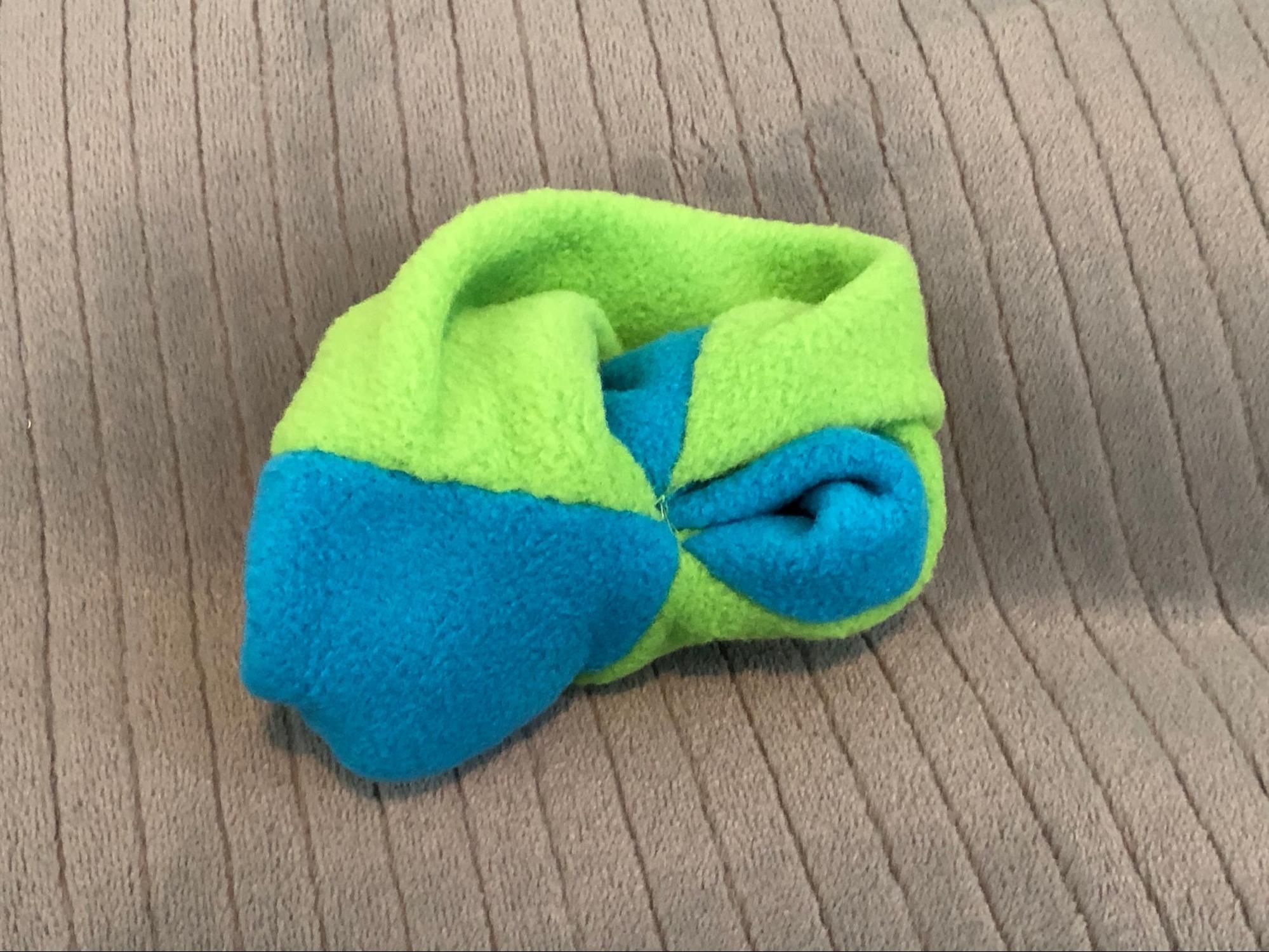
After the fifth edge is joined, the second cycle becomes apparent. The single "6 pi" singularity is in the center.