Despite the fact that jobs in STEM are multiplying and pay better than other careers, women remain woefully underrepresented in science, technology, engineering, and math jobs. Some of this imbalance may be traced back to attitudes about mathematics and sciences in middle school and high school. There is a documented decline in girls’ positive feelings about mathematics beginning in middle school, and from this point forward girls are far less likely than their male peers to choose elective courses in mathematics and the sciences[1][2]. The absence of girls in mathematics and science elective courses is especially severe among low-income and disadvantaged students. Research has shown that school-aged girls may not realize that their preferred career choice requires coursework in mathematics and sciences[3], so these decisions can have long-lasting consequences.
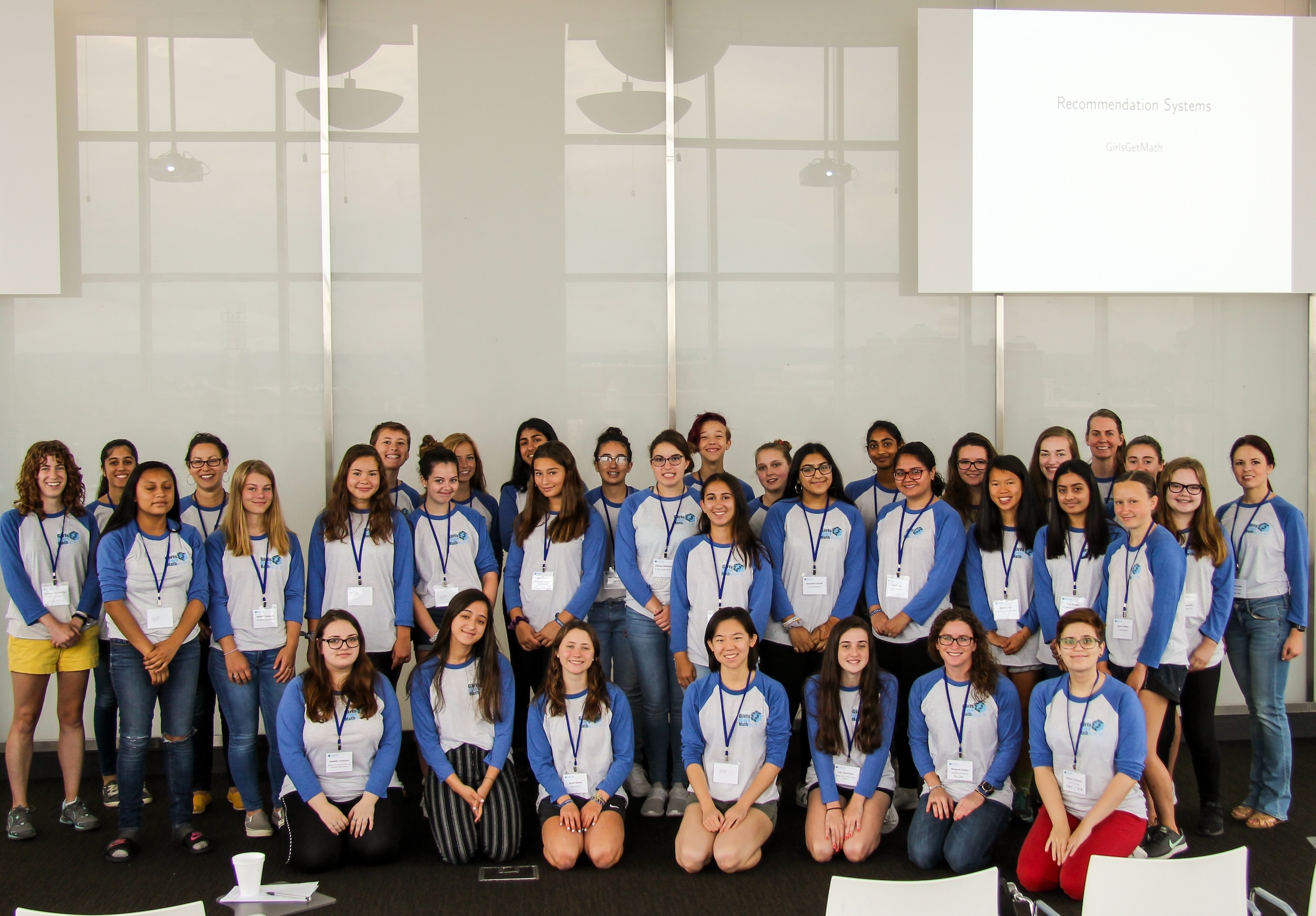
GirlsGetMath@ICERM aims to build knowledge and confidence in mathematics ability early in education, ultimately shaping the way the students view themselves and their mathematical interests and potential. The program will:
- Demonstrate through hands-on activities, games, and computer simulations that the study of mathematics can be exciting, beautiful, and useful;
- Introduce the high school participants to a variety of career opportunities for which sophisticated mathematical ability plays a key role, with an emphasis on the central role mathematics plays for success in STEM careers; and
- Provide the participants with a support group of like-minded peers and mentors.
- An outstanding feature of the GirlsGetMath@ICERM program is its commitment to quality. The program content is created by Ph.D. mathematicians who collectively have many years of experience as researchers and educators. The content is chosen to be at the appropriate level for the participants, but at the same time challenging, useful, and engaging to high school students. The Faculty Organizers of GirlsGetMath are college and university faculty in mathematics with experience leading summer mathematics programs for students. The Teaching Assistants are undergraduate and graduate students in mathematics and computer science.
References:
[1] J. Blue and D. Gann, When do girls lose interest in math and science?, Science Scope, (2008).
[2] J. Wilkins and X. Ma, Modeling change in students' attitude toward and beliefs about mathematics, Journal of Educational Research, (2007).
[3] L. Pettitt, Middle School Students’ Perception of Math and Science Abilities and Related Careers, 61st Biennial Meeting of Research in Child Development, (1995).