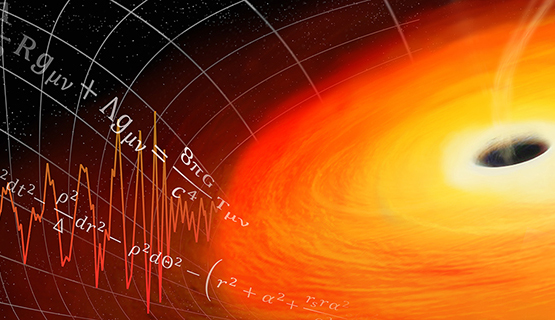
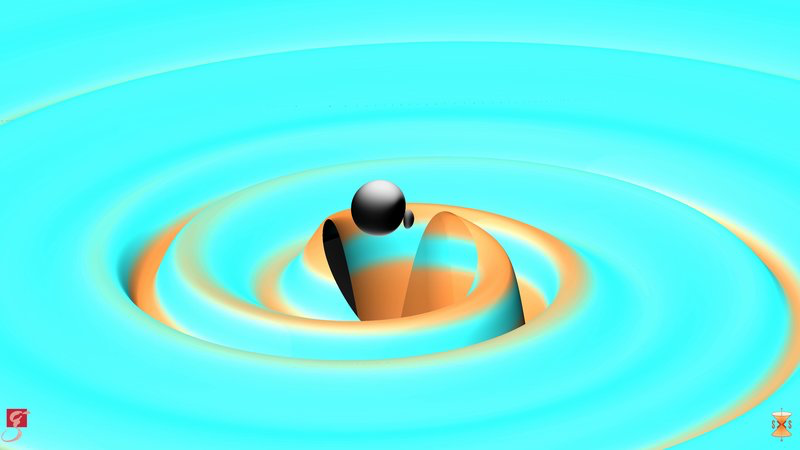
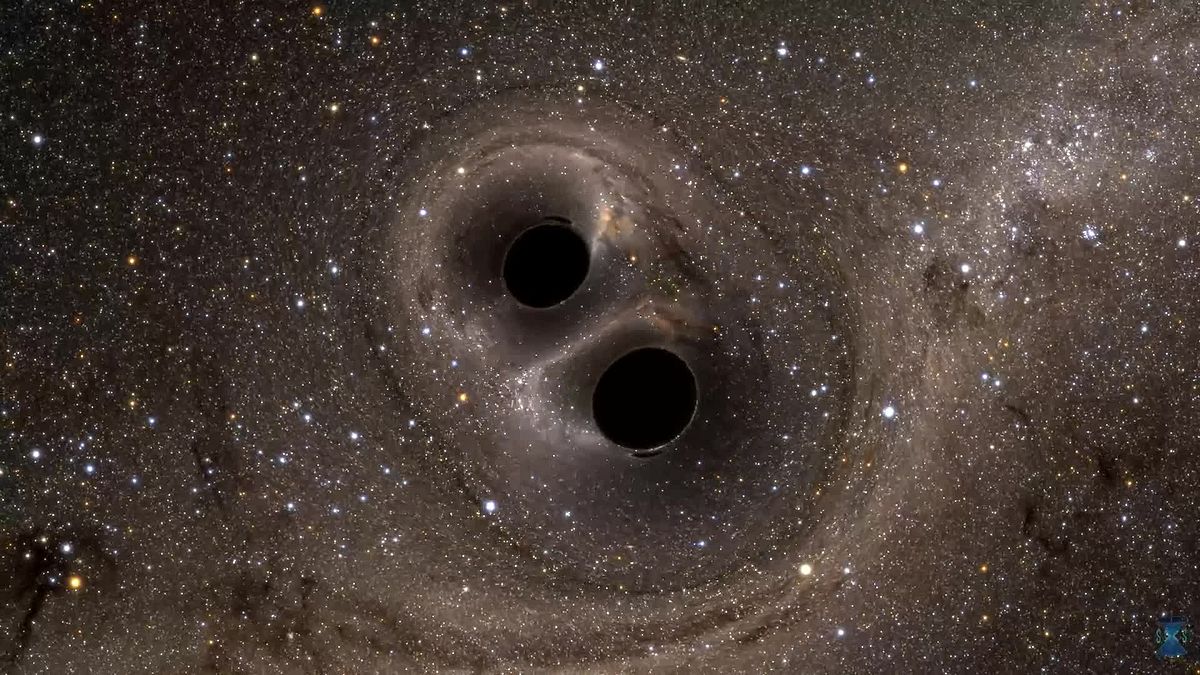
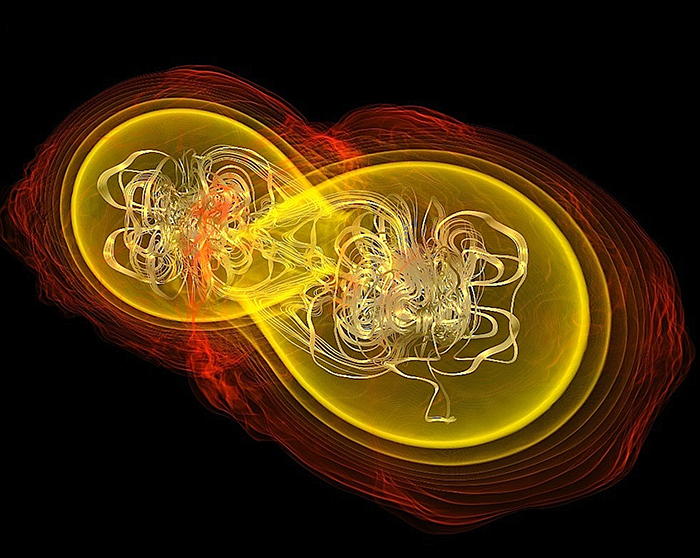
The Nobel-Prize-winning detection of gravitational waves from binary black hole systems in 2015 by the Laser Interferometer Gravitational-Wave Observatory (LIGO) and the LIGO Scientific Collaboration has opened a new window on the universe. In addition, the 2017 observation of both gravitational and electromagnetic waves emitted by a binary neutron star system marked a new era of multi-messenger astronomy. While these successes are a remarkable experimental feat, they also constitute a significant computational achievement due to the crucial role played by accurate numerical models of the astrophysical sources in gravitational-wave data analysis. As current detectors are upgraded and new detectors come online within an international network of observatories, accurate, efficient, and advanced computational methods will be indispensable for interpreting the diversity of gravitational wave signals. This semester program at ICERM will emphasize the fundamental mathematical and computational challenges in computational relativity and gravitational-wave data science.
The aim of this semester program is to bring together pure and applied mathematicians, physicists, and statisticians with the goals of fostering an environment for in-depth collaboration and cross-pollination of ideas between these communities, working towards solving the most pressing mathematical modeling and numerical simulation issues facing the gravitational wave community, and cultivating new subfields within mathematics that focus on important, pressing issues related to gravitational waves as well as providing mathematicians with new questions and problems to explore.
The program's areas of focus will be: (i) mathematical and computational approaches for solving the source-free Einstein field equations (a nonlinear, coupled, hyperbolic-elliptic PDE system) including fundamental aspects of general relativity or alternative theories of gravity, (ii) mathematical and computational approaches for the Einstein field equations with matter and magnetic fields, as well as the multi-scale, multi-physics modeling challenges for such problems, and (iii) methods for the detection, classification, and Bayesian inference of relativistic objects and gravitational-wave datasets, especially by considering under-explored techniques such as machine learning or uncertainty quantification.
Sergey G. Bobkov, Refinements of Berry--Esseen Inequalities in Terms of Lyapunov Coefficients, Journal of Fourier Analysis and Applications 29 (2023) no. 6, 72.
Bülent Köklüce, Representations by sexternary quadratic forms with coefficients 1,2,5 and 10, jbibtex-1:2207.05638, 2022.
Vijay Varma, Sylvia Biscoveanu, Tousif Islam, Feroz H. Shaik, Carl-Johan Haster, Maximiliano Isi, Will M. Farr, Scott E. Field, Salvatore Vitale, Evidence of Large Recoil Velocity from a Black Hole Merger Signal, Physical Review Letters 128 (2022) no. 19.
Rory Smith, Ssohrab Borhanian, Bangalore Sathyaprakash, Francisco Hernandez Vivanco, Scott E. Field, Paul Lasky, Ilya Mandel, Soichiro Morisaki, David Ottaway, Bram J. J. Slagmolen, Eric Thrane, Daniel Töyrä, Salvatore Vitale, Bayesian Inference for Gravitational Waves from Binary Neutron Star Mergers in Third Generation Observatories, Physical Review Letters 127 (2021) no. 8.
Bhooshan Gadre, Michael Pürrer, Scott E. Field, Serguei Ossokine, Vijay Varma, A fully precessing higher-mode surrogate model of effective-one-body waveforms, gadre2022fully:2203.00381, 2022.
Tousif Islam, Scott E. Field, Carl-Johan Haster, Rory Smith, High precision source characterization of intermediate mass-ratio black hole coalescences with gravitational waves: The importance of higher order multipoles, Physical Review D 104 (2021) no. 8.
Tousif Islam, Scott E. Field, Carl-Johan Haster, Rory Smith, Improved analysis of GW190412 with a precessing numerical relativity surrogate waveform model, Physical Review D 103 (2021) no. 10.
Brendan Keith, Akshay Khadse, Scott E. Field, Learning orbital dynamics of binary black hole systems from gravitational wave measurements, Physical Review Research 3 (2021) no. 4.
Tousif Islam, Scott E. Field, Scott A. Hughes, Gaurav Khanna, Vijay Varma, Matthew Giesler, Mark A. Scheel, Lawrence E. Kidder, Harald P. Pfeiffer, Surrogate model for gravitational wave signals from nonspinning, comparable-to large-mass-ratio black hole binaries built on black hole perturbation theory waveforms calibrated to numerical relativity, Physical Review D 106 (2022) no. 10.
Scott E. Field, Sigal Gottlieb, Zachary J. Grant, Leah F. Isherwood, Gaurav Khanna, A GPU-Accelerated Mixed-Precision WENO Method for Extremal Black Hole and Gravitational Wave Physics Computations, Communications on Applied Mathematics and Computation 5 (2021) no. 1, 97–115.
Scott E. Field, Sigal Gottlieb, Gaurav Khanna, Ed McClain, Discontinuous Galerkin Method for Linear Wave Equations Involving Derivatives of the Dirac Delta Distribution, Springer International Publishing, 2022.
Tousif Islam, Vijay Varma, Jackie Lodman, Scott E. Field, Gaurav Khanna, Mark A. Scheel, Harald P. Pfeiffer, Davide Gerosa, Lawrence E. Kidder, Eccentric binary black hole surrogate models for the gravitational waveform and remnant properties: Comparable mass, nonspinning case, Physical Review D 103 (2021) no. 6.
Dwyer S. Deighan, Scott E. Field, Collin D. Capano, Gaurav Khanna, Genetic-algorithm-optimized neural networks for gravitational wave classification, Neural Computing and Applications 33 (2021) no. 20, 13859–13883.
Dwyer S. Deighan, Scott E. Field, Collin D. Capano, Gaurav Khanna, Genetic-algorithm-optimized neural networks for gravitational wave classification, Neural Computing and Applications 33 (2021) no. 20, 13859–13883.
Tousif Islam, Scott E. Field, Scott A. Hughes, Gaurav Khanna, Vijay Varma, Matthew Giesler, Mark A. Scheel, Lawrence E. Kidder, Harald P. Pfeiffer, Surrogate model for gravitational wave signals from nonspinning, comparable-to large-mass-ratio black hole binaries built on black hole perturbation theory waveforms calibrated to numerical relativity, Physical Review D 106 (2022) no. 10.
Tousif Islam, Scott E. Field, Gaurav Khanna, Niels Warburton, Survey of gravitational wave memory in intermediate mass ratio binaries, Physical Review D 108 (2023) no. 2.
Tousif Islam, Scott E. Field, Gaurav Khanna, Remnant black hole properties from numerical-relativity-informed perturbation theory and implications for waveform modelling, islam2023remnant:2301.07215, 2023.
Miguel Bezares, Mateja Bošković, Steven Liebling, Carlos Palenzuela, Paolo Pani, Enrico Barausse, Gravitational waves and kicks from the merger of unequal mass, highly compact boson stars, Physical Review D 105 (2022) no. 6.
Carlos Palenzuela, Steven Liebling, Borja Miñano, Large eddy simulations of magnetized mergers of neutron stars with neutrinos, Physical Review D 105 (2022) no. 10.
Steven L. Liebling, Carlos Palenzuela, Dynamical boson stars, Living Reviews in Relativity 26 (2023) no. 1.
Steven L. Liebling, Carlos Palenzuela, Dynamical boson stars, Living Reviews in Relativity 26 (2023) no. 1.
Tousif Islam, Scott E Field, Gaurav Khanna, Remnant black hole properties from numerical-relativity-informed perturbation theory and implications for waveform modelling, arXiv preprint arXiv:2301.07215 (2023).
Tousif Islam, Scott E Field, Scott A Hughes, Gaurav Khanna, Vijay Varma, Matthew Giesler, Mark A Scheel, Lawrence E Kidder, Harald P Pfeiffer, Surrogate model for gravitational wave signals from nonspinning, comparable-to large-mass-ratio black hole binaries built on black hole perturbation theory waveforms calibrated to numerical relativity, Physical Review D 106 (2022) no. 10, 104025.
Steven L Liebling, Carlos Palenzuela, Dynamical boson stars, Living Reviews in Relativity 26 (2023) no. 1, 1.
Tousif Islam, Scott E Field, Scott A Hughes, Gaurav Khanna, Vijay Varma, Matthew Giesler, Mark A Scheel, Lawrence E Kidder, Harald P Pfeiffer, Surrogate model for gravitational wave signals from nonspinning, comparable-to large-mass-ratio black hole binaries built on black hole perturbation theory waveforms calibrated to numerical relativity, Physical Review D 106 (2022) no. 10, 104025.
Stefanos Aretakis, Stefan Czimek, Igor Rodnianski, The characteristic gluing problem for the Einstein equations and applications, arXiv preprint arXiv:2107.02441 (2021).
Carlos Palenzuela, Steven Liebling, Borja Mi{\~n}ano, Large eddy simulations of magnetized mergers of neutron stars with neutrinos, Physical Review D 105 (2022) no. 10, 103020.
Miguel Bezares, Mateja Bo{\v{s}}kovi{\'c}, Steven Liebling, Carlos Palenzuela, Paolo Pani, Enrico Barausse, Gravitational waves and kicks from the merger of unequal mass, highly compact boson stars, Physical Review D 105 (2022) no. 6, 064067.
Tousif Islam, Scott E Field, Gaurav Khanna, Niels Warburton, Survey of gravitational wave memory in intermediate mass ratio binaries, arXiv preprint arXiv:2109.00754 (2021).
Tousif Islam, Scott E Field, Scott A Hughes, Gaurav Khanna, Vijay Varma, Matthew Giesler, Mark A Scheel, Lawrence E Kidder, Harald P Pfeiffer, Surrogate model for gravitational wave signals from non-spinning, comparable-to large-mass-ratio black hole binaries built on black hole perturbation theory waveforms calibrated to numerical relativity, arXiv preprint arXiv:2204.01972 (2022).
Jacob Lange, Richard O'Shaughnessy, Kevin Barkett, Vijay Varma, Scott Field, Reassessment of GW170817 and GW190425 using higher order mode models, Bulletin of the American Physical Society (2022).
Tousif Islam, Feroz Shaik, Carl-Johan Haster, Vijay Varma, Scott Field, Jacob Lange, Richard O'Shaughnessy, Rory Smith, Avi Vajpeyi, Re-analyzing GWTC-3 events with a numerical relativity surrogate waveform model, APS April Meeting Abstracts, vol. 2022, 2022, pp. L16-004.
Brendan Keith, Akshay Khadse, Scott E Field, Orbital dynamics of binary black hole systems can be learned from gravitational wave measurements, arXiv preprint arXiv:2102.12695 (2021).
Brendan Keith, Akshay Khadse, Scott E Field, Learning orbital dynamics of binary black hole systems from gravitational wave measurements, Physical Review Research 3 (2021) no. 4, 043101.
Tousif Islam, Scott E Field, Carl-Johan Haster, Rory Smith, Improved analysis of GW190412 with a precessing numerical relativity surrogate waveform model, Physical Review D 103 (2021) no. 10, 104027.
Tousif Islam, Scott E Field, Carl-Johan Haster, Rory Smith, High precision source characterization of intermediate mass-ratio black hole coalescences with gravitational waves: The importance of higher order multipoles, Physical Review D 104 (2021) no. 8, 084068.
Dwyer S Deighan, Scott E Field, Collin D Capano, Gaurav Khanna, Genetic-algorithm-optimized neural networks for gravitational wave classification, Neural Computing and Applications 33 (2021) no. 20, 13859-13883.
T Celora, I Hawke, PC Hammond, N Andersson, GL Comer, Formulating bulk viscosity for neutron star simulations, Physical Review D 105 (2022) no. 10, 103016.
Manuel R Izquierdo, Lorenzo Pareschi, Borja Mi{\~n}ano, Joan Mass{\'o}, Carlos Palenzuela, Global high-order numerical schemes for the time evolution of the general relativistic radiation magneto-hydrodynamics equations, arXiv preprint arXiv:2211.00027 (2022).
Dongbing Zha, Global stability of solutions to two-dimension and one-dimension systems of semilinear wave equations, Journal of Functional Analysis 282 (2022) no. 1, 109219.
Stefanos Aretakis, Stefan Czimek, Igor Rodnianski, The characteristic gluing problem for the Einstein vacuum equations. Linear and non-linear analysis, aretakis2021characteristic:2107.02449, 2021.
Xinyu Cheng, Dong Li, Jiao Xu, Dongbing Zha, Global wellposedness for 2D quasilinear wave without Lorentz, arXiv preprint arXiv:2105.10928 (2021).
Xinyue Yu, Jichun Li, Chi-Wang Shu, Local discontinuous Galerkin methods for the carpet cloak model, Annals of Mathematical Sciences and Applications 7 (2022) no. 1, 97-137.
Evan Gawlik, Michael J Holst, Martin W Licht, Local finite element approximation of Sobolev differential forms, ESAIM: Mathematical Modelling and Numerical Analysis 55 (2021) no. 5, 2075-2099.
Ricard Aguilera-Miret, Daniele Vigan{\`o}, Carlos Palenzuela, Universality of the turbulent magnetic field in hypermassive neutron stars produced by binary mergers, The Astrophysical Journal Letters 926 (2022) no. 2, L31.
Daniele Funaro, The Space-Time Metric Outside a Pulsating Charged Sphere, Applied Sciences 12 (2022) no. 14, 7290.
Leo Abbrescia, Jared Speck, The emergence of the singular boundary from the crease in $3 D $ compressible Euler flow, arXiv preprint arXiv:2207.07107 (2022).
Stefanos Aretakis, Stefan Czimek, Igor Rodnianski, The characteristic gluing problem for the Einstein vacuum equations. Linear and non-linear analysis, arXiv preprint arXiv:2107.02449 (2021).
Zachary Nasipak, Charles R Evans, Resonant self-force effects in extreme-mass-ratio binaries: A scalar model, Physical Review D 104 (2021) no. 8, 084011.
Stefanos Aretakis, Stefan Czimek, Igor Rodnianski, Characteristic gluing to the Kerr family and application to spacelike gluing, aretakis2021characteristic:2107.02456, 2021.
Vijay Varma, Sylvia Biscoveanu, Tousif Islam, Feroz H Shaik, Carl-Johan Haster, Maximiliano Isi, Will M Farr, Scott E Field, Salvatore Vitale, Evidence of large recoil velocity from a black hole merger signal, Physical Review Letters 128 (2022) no. 19, 191102.
Zachary Nasipak, Dissipation due to the (not-so) conservative self-force for resonant extreme-mass-ratio inspirals, Bulletin of the American Physical Society (2022).
Kenneth Duru, Siyang Wang, Kenny Wiratama, A conservative and energy stable discontinuous spectral element method for the shifted wave equation in second order form, SIAM Journal on Numerical Analysis 60 (2022) no. 4, 1631-1664.
Brendan Keith, A priori error analysis of high-order LL*(FOSLL*) finite element methods, Computers \& Mathematics with Applications 103 (2021), 12-18.
Hao Li, Accuracy and monotonicity of spectral element method on structured meshes, Ph.D. thesis, Purdue University, 2021.
Hao Li, Daniel Appelö, Xiangxiong Zhang, Accuracy of Spectral Element Method for Wave, Parabolic, and Schrödinger Equations, SIAM Journal on Numerical Analysis 60 (2022) no. 1, 339-363.
Florian Beiser, Brendan Keith, Simon Urbainczyk, Barbara Wohlmuth, Adaptive sampling strategies for risk-averse stochastic optimization with constraints, arXiv preprint arXiv:2012.03844 (2020).
Daniel Appel{\"o}, Lu Zhang, Thomas Hagstrom, Fengyan Li, An Energy-Based Discontinuous Galerkin Method with Tame CFL Numbers for the Wave Equation, arXiv preprint arXiv:2110.07099 (2021).
Daniele Funaro, Ball Lightning as Plasma Vortexes: A Reinforcement of the Conjecture, Applied Sciences 12 (2022) no. 7, 3451.
Andreas {\v{C}}ap, Kaibo Hu, BGG sequences with weak regularity and applications, arXiv preprint arXiv:2203.01300 (2022).
Douglas N Arnold, Kaibo Hu, Complexes from complexes, Foundations of Computational Mathematics 21 (2021) no. 6, 1739-1774.
Jichun Li, Chi-Wang Shu, Wei Yang, Development and analysis of two new finite element schemes for a time-domain carpet cloak model, Advances in Computational Mathematics 48 (2022) no. 3, 1-30.
Jeffrey W Banks, B Brett Buckner, T Hagstrom, Karl Juhnke, Discontinuous Galerkin Galerkin differences for the wave equation in second-order form, SIAM Journal on Scientific Computing 43 (2021) no. 2, A1497-A1526.
Thomas Hagstrom, Daniel Appel{\"o}, Lu Zhang, Discontinuous Galerkin Methods for Electromagnetic Waves in Dispersive Media, 2021 International Applied Computational Electromagnetics Society Symposium (ACES), IEEE, 2021, pp. 1-4.
Kenneth Duru, Frederick Fung, Christopher Williams, Dual-pairing summation by parts finite difference methods for large scale elastic wave simulations in 3D complex geometries, Journal of Computational Physics 454 (2022), 110966.
Lorella Fatone, Daniele Funaro, Electromagnetic fields simulating a rotating sphere and its exterior with implications to the modeling of the heliosphere, Mathematical Methods in the Applied Sciences (2022).
Lu Zhang, Daniel Appel{\"o}, Thomas Hagstrom, Energy-based discontinuous Galerkin difference methods for second-order wave equations, Communications on Applied Mathematics and Computation (2021), 1-25.
Snorre H Christiansen, Kaibo Hu, Finite element systems for vector bundles: elasticity and curvature, Foundations of Computational Mathematics (2022), 1-52.
Katie Rink, Scott Field, Kevin Gonzalez-Quesada, Tousif Islam, Gaurav Khanna, Nur-E Rifat, Vijay Varma, others, A Computationally Efficient Surrogate Model for Generating High-Accuracy Intermediate to High Mass-Ratio Inspiral Waveforms, Bulletin of the American Physical Society (2022).
Bhooshan Gadre, Michael P{\"u}rrer, Scott E Field, Serguei Ossokine, Vijay Varma, A fully precessing higher-mode surrogate model of effective-one-body waveforms, arXiv preprint arXiv:2203.00381 (2022).
Scott E Field, Sigal Gottlieb, Zachary J Grant, Leah F Isherwood, Gaurav Khanna, A GPU-accelerated mixed-precision WENO method for extremal black hole and gravitational wave physics computations, Communications on Applied Mathematics and Computation (2021), 1-19.
Rory Smith, Ssohrab Borhanian, Bangalore Sathyaprakash, Francisco Hernandez Vivanco, Scott E Field, Paul Lasky, Ilya Mandel, Soichiro Morisaki, David Ottaway, Bram JJ Slagmolen, others, Bayesian inference for gravitational waves from binary neutron star mergers in third generation observatories, Physical review letters 127 (2021) no. 8, 081102.
T Islam, S Field, C Haster, R Smith, Detectability and source characterization of intermediate mass-ratio black hole coalescences with gravitational waves, American Astronomical Society Meeting Abstracts, vol. 53, 2021, pp. 125-07.
Scott E Field, Sigal Gottlieb, Gaurav Khanna, Ed McClain, Discontinuous Galerkin method for linear wave equations involving derivatives of the Dirac delta distribution, arXiv preprint arXiv:2211.14390 (2022).
Tousif Islam, Vijay Varma, Jackie Lodman, Scott E Field, Gaurav Khanna, Mark A Scheel, Harald P Pfeiffer, Davide Gerosa, Lawrence E Kidder, Eccentric binary black hole surrogate models for the gravitational waveform and remnant properties: Comparable mass, nonspinning case, Physical Review D 103 (2021) no. 6, 064022.
Feroz Shaik, Scott Field, Error estimation and bounds for gravitational-wave surrogate models, APS April Meeting Abstracts, vol. 2021, 2021, pp. L16-008.
Gayathri V, J. Healy, J. Lange, B. O’Brien, M. Szczepańczyk, Imre Bartos, M. Campanelli, S. Klimenko, C. Lousto, R. O'Shaughnessy, Eccentricity estimate for black hole mergers with numerical relativity simulations, Nature Astronomy (2022).
Department of Humanities & Sciences, School of Electrical Engineering & Computer Science, National University of Sciences & Technology, Islamabad Oct 5 - 9, 2020
Panagiotis Iosif
Aristotle University of Thessaloniki Nov 16 - 20, 2020
Quaid-i-Azam University, Islamabad, Pakistan Oct 5 - 9, 2020
Nils Siemonsen
Perimeter Institute Sep 14 - 18, 2020; Oct 26 - 30, 2020
Mukesh Singh
INTERNATIONAL CENTRE FOR THEORETICAL SCIENCES, TATA INSTITUTE FOR FUNDAMENTAL RESEARCH, BENGALURU, INDIA Oct 5 - 9, 2020; Oct 26 - 30, 2020; Nov 16 - 20, 2020
Neha Singh
Astronomical Observatory, University of Warsaw Nov 16 - 20, 2020
Mithibai College of Arts, Chauhan Institute of Science & Amruthben Jivanlal College of Commerce and Economics Sep 14 - 18, 2020; Oct 5 - 9, 2020; Oct 26 - 30, 2020; Nov 16 - 20, 2020