Loading...
Organizing Committee
George Mason University
Union College
University of Alberta
California State University, Channel Islands
Rutgers University
University of Wisconsin
UCLA
Rutgers University
Rutgers University
Middle East Technical University
Wilfrid Laurier University
Abstract
Research Collaboration Workshop for Women in Data Science and Mathematics (WiSDM). This program will bring together women at all stages of their careers, from graduate students to senior researchers, to collaborate on problems in data science. The scientific focus will be on cutting edge problems in the areas of predictive modeling, multi-scale representation and feature selection, statistical and topological learning, and related areas. Data science is a cross-disciplinary field relying on statistics, computer science and mathematics and driven by problems in many other disciplines. While data science has emerged as a prominent new field enrolls record numbers and attracts research talents from many scientific disciplines, the role of theoretical and applied mathematics has not been highly visible. Mathematics provides many structured representations that can be in the analysis of data arising from such diverse fields as geometric measure theory, classical analysis, computational topology, shape theory, algebraic statistics, and spectral graph theory. Furthermore, mathematics may enable more classes of data sets to be represented as measures and distributions which could then leverage classical statistical techniques.
Meanwhile, mathematics and computer science are two of three disciplines with the lowest percentage of women attaining PhDs (28% and 24%, respectively). Creating explicit research bridges between these groups will provide networks of women with similar research interests, and will also create pathways for the female-friendly culture in statistics to make its way into mathematics and computer science. This workshop will generate research collaborations, and highlight mathematics as a primary contributor. Successful applicants will be assigned to a research problem based on their expertise. Each group will aim to include a more senior person in each of statistics, machine learning, and mathematics.
Partially supported by NSF-HRD 1500481 - AWM ADVANCE grant. Additional support for some participant travel will be provided by DIMACS in association with its Special Focus on Information Sharing and Dynamic Data Analysis. Co-sponsored by Brown's Data Science Initiative.
Meanwhile, mathematics and computer science are two of three disciplines with the lowest percentage of women attaining PhDs (28% and 24%, respectively). Creating explicit research bridges between these groups will provide networks of women with similar research interests, and will also create pathways for the female-friendly culture in statistics to make its way into mathematics and computer science. This workshop will generate research collaborations, and highlight mathematics as a primary contributor. Successful applicants will be assigned to a research problem based on their expertise. Each group will aim to include a more senior person in each of statistics, machine learning, and mathematics.
Partially supported by NSF-HRD 1500481 - AWM ADVANCE grant. Additional support for some participant travel will be provided by DIMACS in association with its Special Focus on Information Sharing and Dynamic Data Analysis. Co-sponsored by Brown's Data Science Initiative.
Loading...
Loading participant list in background...
Projects
Predictive Models for Molecular Data
Group Leaders TBA
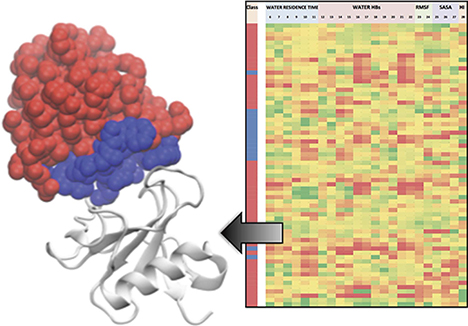
Using data generated in past molecular modeling projects, participants will be encouraged to apply a range of machine learning and informatics techniques to analyze the data and build/optimize predictive models. Some prior models have been built with a hundred or so experimental data points, while other bimolecular models have utilized over 50,000 data points.
Through these exercises, participants will learn the applicability of varied machine learning methods to datasets of different sizes (both the number of data points and the length of feature vectors). In addition, best practices in cross-validation will be discussed, so as to give participants a sense of how to organize their data in a way that is most rigorous when existing relationships among the data points are known. It may be possible to include deep learning methods as well.
Representation of Data as Multi-Scale Features and Measures
Group Leaders TBA
Recently, multi-scale representation theorems from harmonic analysis and geometric measure theory due to Fefferman, Kenig and Pipher, Peter W. Jones, Coifman and Lafon, etc. have been exploited to compute canonical multi-scale representations of data samples. The representations have been exploited for multiple purposes, including for supervised machine learning (where they provide automatically constructed features), for unsupervised learning of regimes and anomalies, for statistical fusion and construction of confidence measures, and for data visualization.
The methods are very general and have been demonstrated on network and sensor data sets. Multi-resolution inference has been proposed by X. Meng as an important new research challenge in statistics. This research collaboration would enable assessment of the applicability of multiscale representation approaches to other types of data (e.g., molecular modeling data used to study obstructive sleep apnea, and possibly a cyber-security related data set). It would also serve the purpose of introducing this approach to statistical researchers who may be interested in statistical fusion, data depth, and confidence measures. In addition, new multi-scale methods for representation of data as measures characterizing mathematical properties of the data (e.g. geometric properties) could be developed and applied.
The methods are very general and have been demonstrated on network and sensor data sets. Multi-resolution inference has been proposed by X. Meng as an important new research challenge in statistics. This research collaboration would enable assessment of the applicability of multiscale representation approaches to other types of data (e.g., molecular modeling data used to study obstructive sleep apnea, and possibly a cyber-security related data set). It would also serve the purpose of introducing this approach to statistical researchers who may be interested in statistical fusion, data depth, and confidence measures. In addition, new multi-scale methods for representation of data as measures characterizing mathematical properties of the data (e.g. geometric properties) could be developed and applied.
Inferential Models Founded in Statistical and Topological Learning
Group Leaders TBA
Pediatric obstructive sleep apnea (OSA) is a form of sleep-disordered breathing characterised by recurrent episodes of partial or complete airway obstruction during sleep, and is prevalent in one to five percent of school-aged children. While the gold standard for pediatric OSA diagnosis is an overnight polysomnography (PSG), the high cost of this procedure and the lack of sleep clinics often precludes children from receiving necessary treatment and ultimately has a significant impact on overall future quality of life through numerous OSA-associated sequelae.
A systematic review and meta-analysis of pediatric OSA literature reveals a link between craniofacial morphology and OSA prevalence in pediatric patients. The presence of this relationship has led to the hypothesis that experienced dentists and orthodontists may be able to identify children at risk of developing OSA simply by observing a child’s craniofacial characteristics.
In this project, we propose a study of real-word pediatric OSA datasets in order to (1) develop a statistical and topological learning (STL) model that can accurately predict OSA severity, and (2) verify whether OSA severity measurements given by orthodontists are comparable to those given by sleep specialists via PSG. To tackle the substantial number of variables inherent in OSA data—including time series data (e.g.: EOG, EMG, and ECG), three dimensional images of the face and upper airway, medical history, dental measurements, various questionnaires, blood and urine samples, and other sleep-disordered breathing risk factors—we propose a review of existing STL methods in order to achieve the above research goals. In particular, we will incorporate techniques from various fields, including time series analysis, shape analysis, persistent homology, zigzag persistence, graphical LASSO, tensor regression, as well as numerous clustering techniques from statistics and machine learning.
A systematic review and meta-analysis of pediatric OSA literature reveals a link between craniofacial morphology and OSA prevalence in pediatric patients. The presence of this relationship has led to the hypothesis that experienced dentists and orthodontists may be able to identify children at risk of developing OSA simply by observing a child’s craniofacial characteristics.
In this project, we propose a study of real-word pediatric OSA datasets in order to (1) develop a statistical and topological learning (STL) model that can accurately predict OSA severity, and (2) verify whether OSA severity measurements given by orthodontists are comparable to those given by sleep specialists via PSG. To tackle the substantial number of variables inherent in OSA data—including time series data (e.g.: EOG, EMG, and ECG), three dimensional images of the face and upper airway, medical history, dental measurements, various questionnaires, blood and urine samples, and other sleep-disordered breathing risk factors—we propose a review of existing STL methods in order to achieve the above research goals. In particular, we will incorporate techniques from various fields, including time series analysis, shape analysis, persistent homology, zigzag persistence, graphical LASSO, tensor regression, as well as numerous clustering techniques from statistics and machine learning.