Loading...
Organizing Committee
Caltech
Cornell University
University of Massachusetts Dartmouth
Cornell University
California State University Fullerton
Albert-Einstein-Institute, Potsdam, Germany
California Institute of Technology
University of Mississippi
Cornell University
University of Zurich
Abstract
Gravitational-wave astronomy has transformed the study of compact objects, beginning with the first detection of gravitational waves from a binary black hole merger in 2015. Since then, the growing catalog of gravitational-wave observations has revealed increasingly diverse and challenging sources, including systems with higher mass ratios, larger spins, possible eccentricity, and higher signal-to-noise ratios. Interpreting these observations requires accurate numerical-relativity simulations and waveform models that remain reliable across a broader and more challenging region of parameter space.
This weeklong program will focus on numerical relativity for relativistic astrophysics and gravitational-wave science, with an emphasis on the Spectral Einstein Code (SpEC) and the open-source code SpECTRE. The program will include two closely connected activities: a summer school for graduate students and postdocs, and a face-to-face developers' workshop for researchers actively involved in SpEC and SpECTRE code development.
This weeklong program will focus on numerical relativity for relativistic astrophysics and gravitational-wave science, with an emphasis on the Spectral Einstein Code (SpEC) and the open-source code SpECTRE. The program will include two closely connected activities: a summer school for graduate students and postdocs, and a face-to-face developers' workshop for researchers actively involved in SpEC and SpECTRE code development.
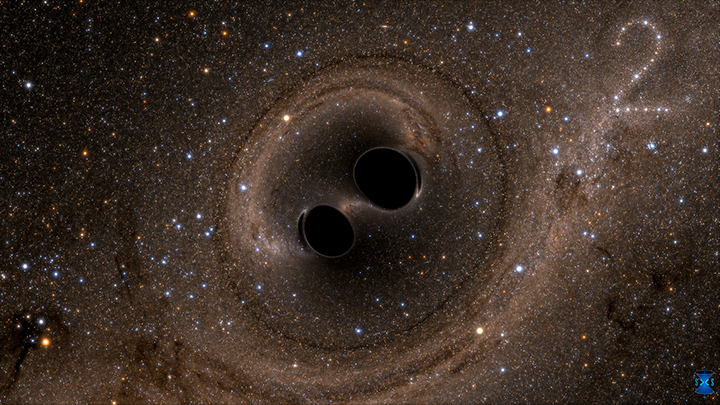
The summer school will provide participants with the tools needed to install, run, understand, and contribute to SpECTRE. Lectures and tutorials will introduce the key equations, algorithms, and computational infrastructure underlying modern numerical-relativity simulations, including the generalized harmonic formulation of Einstein's equations, general relativistic hydrodynamics, neutrinos and microphysics, discontinuous Galerkin methods with finite-volume subcells, shock capturing, Cauchy-characteristic evolution, initial data for binary merger simulations, visualization and analysis of simulation outputs, and pathways for contributing to code development. A hands-on tutorial will guide participants from a new SpECTRE installation to simulating a binary black hole. The school will also cover new topics motivated by scientific and technical developments since the previous workshop, including numerical relativity in alternative theories of gravity and practical guidance on using modern AI coding agents.
The developers' workshop will bring together core SpEC and SpECTRE developers for sustained, in-person discussion of code development priorities, recent advances, current bottlenecks, and open challenges. This group will interact closely with the summer school through lectures, tutorials, mentorship, and collaborative activities. By connecting student training with active code development, the program will expose participants to both established tools and the computational directions needed for the next generation of gravitational-wave science.
The developers' workshop will bring together core SpEC and SpECTRE developers for sustained, in-person discussion of code development priorities, recent advances, current bottlenecks, and open challenges. This group will interact closely with the summer school through lectures, tutorials, mentorship, and collaborative activities. By connecting student training with active code development, the program will expose participants to both established tools and the computational directions needed for the next generation of gravitational-wave science.
Loading...
Loading participant list in background...
Application Information
Applications are not currently open. Please check back at a later date.
Your Visit to ICERM
- ICERM Facilities
- ICERM is located on the 10th & 11th floors of 121 South Main Street in Providence, Rhode Island. ICERM's business hours are 8:30am - 5:00pm during this event. See our facilities page for more info.
- Traveling to ICERM
- ICERM is located at Brown University in Providence, Rhode Island. Providence's T.F. Green Airport (15 minutes south) and Boston's Logan Airport (1 hour north) are the closest airports. Providence is also on Amtrak's Northeast Corridor. See our travel page for full directions.
- Lodging
- Confirmed participants will receive an email to book a room at our preferred hotel, the Hampton Inn & Suites Providence Downtown. Contact programstaff@icerm.brown.edu with questions.Only use hotel links from ICERM’s official emails or this page. ICERM never uses third-party booking vendors.
- Childcare/Schools
- Those traveling with family can contact housing@icerm.brown.edu for childcare and school information.
- Technology Resources
- Wireless internet access and wireless printing are available for all ICERM visitors. Eduroam is supported. Thin clients provide access to web browsers, SSH terminals, and printing. See our Technology Resources page for setup info.
- Accessibility
- For special services, accommodations, or assistance, please contact accessibility@icerm.brown.edu in advance. Thank you.
- Discrimination and Harassment Policy
- ICERM is committed to a safe, professional, and welcoming environment. Brown University's Code of Conduct and related policies apply to all ICERM participants. Contact the ICERM Director or for concerns.
Visa Information
Contact visa@icerm.brown.edu for assistance.
- Eligible to be reimbursed
- B-1 or Visa Waiver Business (WB)
- Ineligible to be reimbursed
- B-2 or Visa Waiver Tourist (WT)
- Already in the US?
F-1 and J-1 not sponsored by ICERM: need to obtain a letter approving reimbursement from the International Office of your home institution prior to travel.
H-1B holders do not need a letter of approval.
All other visas: alert ICERM staff immediately about your situation.
ICERM does not reimburse visa fees. This chart is to inform visitors whether the visa they enter the US on allows them to receive reimbursement for the items outlined in their invitation letter.
Financial Support
This section is for general purposes only and does not indicate that all attendees receive funding. Please refer to your personalized invitation to review your offer.
- Acceptable Costs
- 1 roundtrip between your home institute and ICERM
- Flights on U.S. or E.U. airlines – economy class to either Providence airport (PVD) or Boston airport (BOS)
- Ground Transportation to and from airports and ICERM
- Unacceptable Costs
- Flights on non-U.S. or non-E.U. airlines
- Seats in economy plus, business class, or first class
- Change ticket fees of any kind
- Multi-use bus passes
- Meals or incidentals
- Advance Approval Required
- Personal car travel to ICERM from outside New England
- Multiple-destination plane ticket; does not include layovers to reach ICERM
- Arriving or departing from ICERM more than a day before or day after the program
- Multiple trips to ICERM
- Rental car to/from ICERM
- Flights on a Swiss, Japanese, or Australian airline
- Arriving or departing from airport other than PVD/BOS or home institution’s local airport
- 2 one-way plane tickets to create a roundtrip (often purchased from Expedia, Orbitz, etc.)
- Travel Maximum Contributions
- New England: $350
- Other contiguous US: $850
- Asia & Oceania: $2,000
- All other locations: $1,500
- Note these rates were updated in Spring 2023 and supersede any prior invitation rates.
- Reimbursement Requests
Request Reimbursement with Cube
Refer to the back of your ID badge for more information. Checklists are available at the front desk and in the Reimbursement section of Cube.
- Reimbursement Tips
- Scanned original receipts are required for all expenses
- Airfare receipt must show full itinerary and payment
- ICERM does not offer per diem or meal reimbursement
- Allowable mileage is reimbursed at prevailing IRS Business Rate and trip documented via Google Maps PDF
- Keep all documentation until you receive your reimbursement!
- Reimbursement Timing
Projects
Summer School
Group Leaders TBA
The summer school will provide participants with the tools needed to install, run, understand, and contribute to SpECTRE. Lectures and tutorials will introduce the key equations, algorithms, and computational infrastructure underlying modern numerical-relativity simulations, including the generalized harmonic formulation of Einstein's equations, general relativistic hydrodynamics, neutrinos and microphysics, discontinuous Galerkin methods with finite-volume subcells, shock capturing, Cauchy-characteristic evolution, initial data for binary merger simulations, visualization and analysis of simulation outputs, and pathways for contributing to code development. A hands-on tutorial will guide participants from a new SpECTRE installation to simulating a binary black hole. The school will also cover new topics motivated by scientific and technical developments since the previous workshop, including numerical relativity in alternative theories of gravity and practical guidance on using modern AI coding agents.
Developers' Workshop
Group Leaders TBA
The developers' workshop will bring together core SpEC and SpECTRE developers for sustained, in-person discussion of code development priorities, recent advances, current bottlenecks, and open challenges. This group will interact closely with the summer school through lectures, tutorials, mentorship, and collaborative activities. By connecting student training with active code development, the program will expose participants to both established tools and the computational directions needed for the next generation of gravitational-wave science.